Yemen Crisis: The Battle for Bab al-Mandab and Global Maritime Security
Yemen Crisis: The Battle for Bab al-Mandab and Global Maritime Security
Published 1 month ago
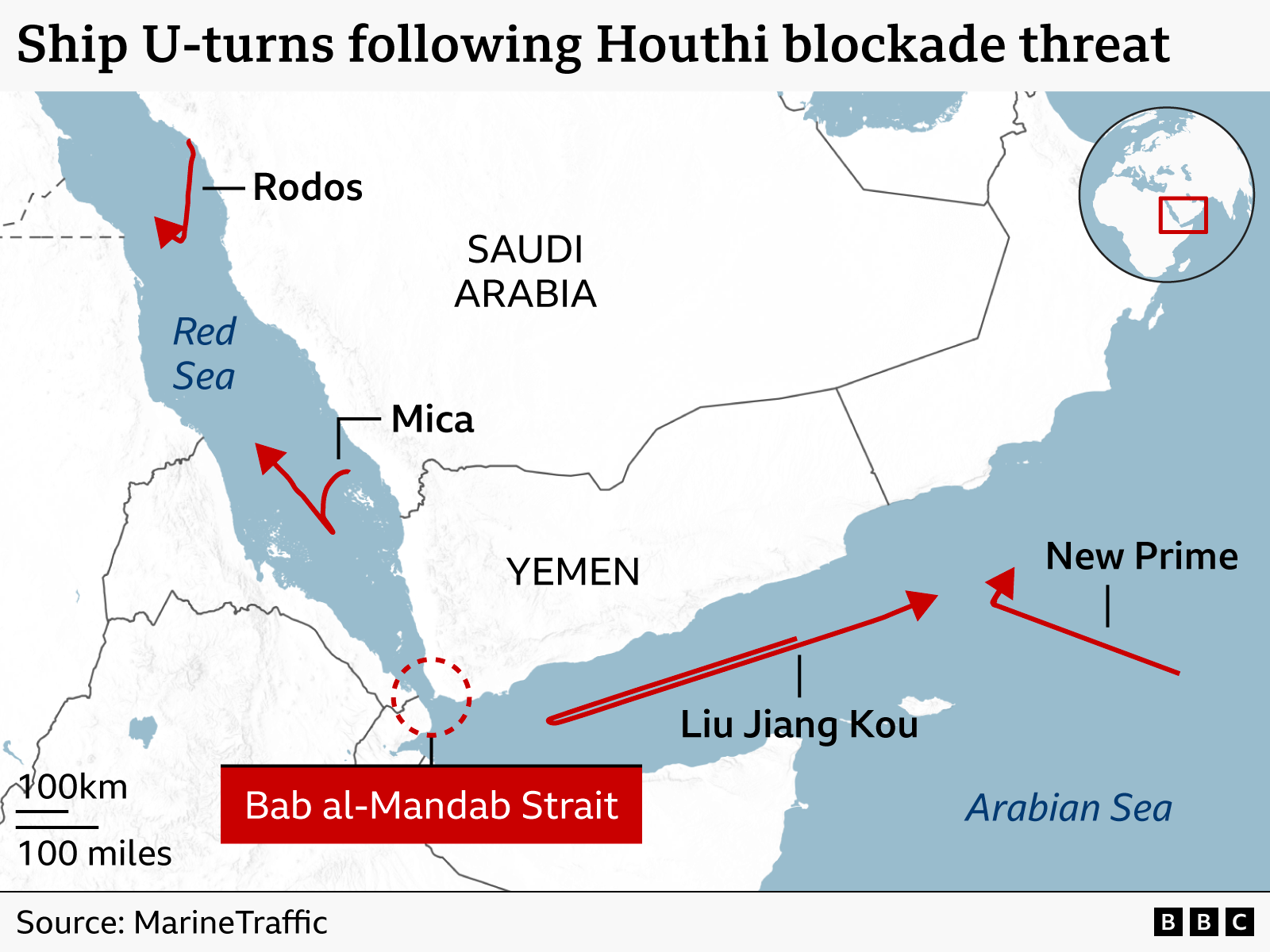
Recent military tensions in Yemen have once again made the Bab al-Mandab Strait a focal point of global politics. Connecting the Red Sea to the Gulf of Aden and the Arabian Sea, Bab al-Mandab serves as a vital artery for international maritime trade. Consequently, the ongoing conflict in Yemen is not confined to the region alone; it has the potential to impact global trade and energy security.
Counter-offensive by Government Forces
In October 2026, Yemen’s internationally recognized government launched a major military operation against the Houthis. Saudi-backed Yemeni forces targeted Houthi positions along the Red Sea coast, advancing into the Dhubab district and securing key locations near Bab al-Mandab.
On October 5, Yemeni government forces claimed to have regained control of Dhubab district, Dhubab Airport, and key strategic locations near Bab al-Mandab. Saudi-led coalition forces also provided air support for the operation. However, the Houthis have challenged these claims by government forces, so the situation on the ground remains fluid.
Houthis' Earlier Advance
This counter-action followed a rapid advance by the Houthis in September 2026. The Houthis made significant inroads into Yemen's Red Sea coastal areas, gaining access to key locations such as Mocha and the island of Mayun (Perim). This situation raised serious security concerns regarding maritime traffic through the Bab al-Mandab Strait.
Maritime traffic was also affected. A significant decline was observed in the number of ships passing through the Bab-el-Mandeb Strait in September, while insurance costs rose due to escalating security threats.
Why is the Bab-el-Mandeb significant?
The strategic importance of the Bab-el-Mandeb transforms the conflict in Yemen into a global maritime security issue. Prolonged instability along this route could force vessels to adopt alternative paths, thereby increasing transit times and costs.
This situation could directly impact revenues from Egypt's Suez Canal, Red Sea trade, regional energy security, and global supply chains. Following the Houthi advance in September, concerns also mounted regarding energy prices in global markets and risks associated with maritime transport.
Broader Geopolitical Conflict
The conflict in Yemen is also linked to the rivalry between regional powers. The Houthis are backed by Iran, while the internationally recognized Yemeni government is supported by Saudi Arabia. Consequently, Yemen's civil war has become part of the broader geopolitical struggle in the Middle East.
Recent fighting has further exacerbated Yemen's humanitarian crisis. The renewed hostilities have displaced hundreds of thousands of people and left them facing insecurity, while clashes continue in Taiz and on other fronts.
Conclusion
The current crisis at the Bab al-Mandab Strait demonstrates the profound impact local conflicts can have on global politics. The struggle for territorial control in Yemen is not merely a matter of civil war and regional rivalry; it is directly linked to freedom of navigation, international trade, and energy security.
Should the conflict escalate further, the security of the Bab al-Mandab Strait will cease to be an issue concerning only Yemen or the Red Sea nations; instead, it could become a critical matter for global maritime security and international economic stability.
More from Writing
Deepfakes: A Double-Edged Sword in International Relations and Global Security:
Deepfakes have evolved from a digital nuisance into a real national security threat capable of fueling political and military crises. But could this same technology also help fight the misinformation it creates?
Read postFrom Cradle to Screens: Raising Tomorrow's Generation
Technology shapes childhood, but balance builds the future.
Read postThe New Oil: How Lithium and Rare Earths are Rewriting Global Power
For a century oil ruled the world, but now power has shifted to who controls lithium and rere Earth's processing.
Read post
Responses
Log in to comment and join the discussion.
Log in