Why One Waterway Matters to the Global Economy
The Strait of Hormuz Crisis shows why global cooperation is essential to prevent economic and environmental disasters.
Published 3 months ago
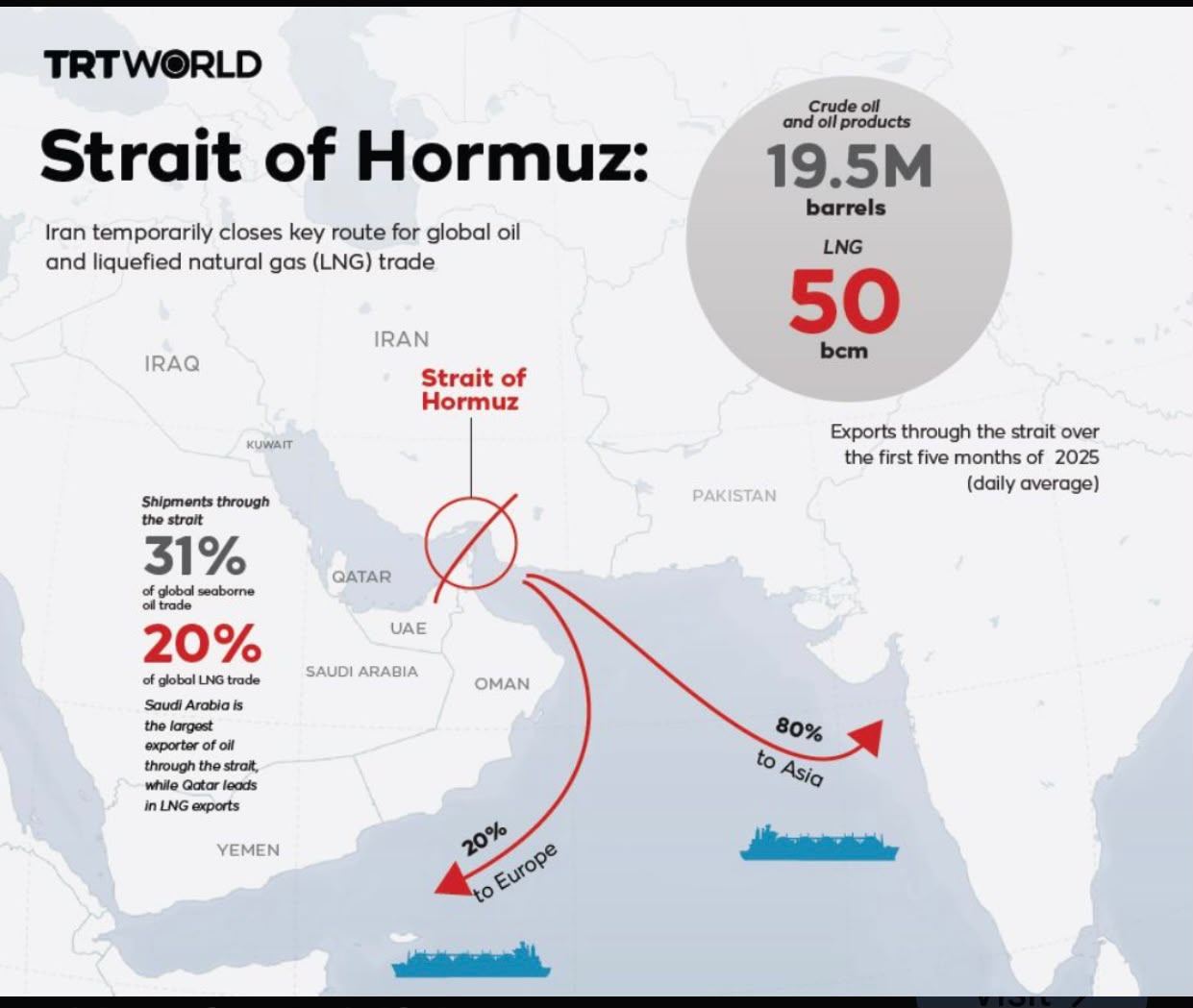
Strait of Hormuz is a vital narrow waterway that connects the Persian Gulf to the Gulf of Oman and the Arabian Sea. It lies between Iran to the north and Oman and the UAE to the south. It is essential because it serves as the world's most critical oil transit chokepoint, carrying 20% of global oil. According to the US Energy Information Administration (EIA), around 20 million barrels of oil passed through the Strait of Hormuz in 2025. It is also crucial for the exports of fertilizers from the Middle East, where natural gas is used in the production process. Around one-third of fertilizers pass through this strait. The possibility of Hormuz closure has been a threat for decades. During the 1980-1988 Iran-Iraq war, attacks on tankers disrupted Gulf shipping and led to international intervention. Today the threat is greater. The recent 2026 crises of strait of Hormuz was due to the Israeli-US attack on Iran. Any military intervention or blockade in the strait could cause oil prices and supply chain disruption, as well as inflation and financial instability because of global dependence on oil exports. During the 2026 conflict, the closure of Hormuz led to fuel shortages and instability in international energy markets. Before the war, 100 ships with 20 million barrels of oil passed through the passage, but by May 2026, traffic on vessels dropped by over 90%, showing how severe the disruption was.
The Strait of Hormuz has always mattered, but the conflict makes its importance more visible. Even though the strait is set to reopen, the consequences of its closure will be felt for months. Reports suggest that because of the damage so far, states like Qatar, Kuwait, and Bahrain will face sharp contraction, while the UAE also faces decline, and Iran is headed towards economic collapse. Emergency measures are being taken to adjust the economy, but everything comes with a cost. They may reduce immediate pressure but cannot replace the systems that have been built over decades. Fuel subsidies show how ordinary people are forced to pay the price for the crises they did not create. Delayed fertilizer shipments show how the effects of war will continue into the next harvest cycle. The passage will eventually be restored, but the end of disruption will not erase what it has revealed. Strait of Hormuz will remain central, but this war has shown that now the strait needs to be managed through cooperation, not only after the damage spread all over the globe.
More from Writing
Deepfakes: A Double-Edged Sword in International Relations and Global Security:
Deepfakes have evolved from a digital nuisance into a real national security threat capable of fueling political and military crises. But could this same technology also help fight the misinformation it creates?
Read postFrom Cradle to Screens: Raising Tomorrow's Generation
Technology shapes childhood, but balance builds the future.
Read postThe New Oil: How Lithium and Rare Earths are Rewriting Global Power
For a century oil ruled the world, but now power has shifted to who controls lithium and rere Earth's processing.
Read post
Responses
Log in to comment and join the discussion.
Log in20% of the world's oil passes through here and you explained why it matters in such a clean way. More creators like you needed 👏
Interested topic, Using water as a tool for dominance is great weapon of this decade.
Very thoughtful calculated observation
Great blog! It explains the importance of the Strait of Hormuz very well. Adding a map or one reliable source reference would make it even more informative and engaging.
Great ✨
What stood out most was how you highlighted ordinary people paying the price — through fuel subsidies and delayed harvests. It’s easy to forget the human cost behind oil numbers. This crisis is a reminder that global security and cooperation aren’t optional anymore.
Next topic should be bab-al-mandab or suiz canal
Nowadays strait of Hormuz hot topic now because this strait always mattered for economy
A strong and well-researched article. I appreciate how you connected global events with their real-world economic impact. Looking forward to reading more from you! 🌍
Did not expect to learn about oil AND fertilizer in one post but now it all makes sense why prices go crazy. 👏🏽👏🏽