When Courts Cannot End a Conflict: The Limits of International Arbitration at Sea
International arbitration can clarify legal rights, but it cannot always end political disputes.
Published 1 week ago
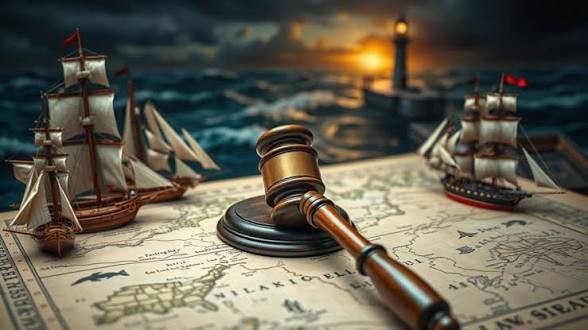
Imagine two countries fighting for shared water. A judge decides where the border lies, but one side disagrees with the decision. It means the ruling came from the conflict that still continues the same thing happening in the South China Sea.
China and the Philippines have the same interest in these waters which are very important for fishing trade and security.In 2016, an international tribunal ruled in a case brought by the Philippines under the UN Convention on the Law of the Sea.It rejected the legal basis for China's expansive historic-rights claims within its nine-dash line. China rejected the ruling.
This case shows that laws can clear the rights but not totally end the conflict. International arbitration has little power to comply with States decisions when they refuse to accept it.
So what's the next step? Countries should open their diplomatic communication, agree on rules for encounters at sea, and also use joint talk to prevent conflict becoming violent. These steps cannot totally end territorial disputes but it can't fully help conflict to become more violent and it can also build trust.
Although laws and courts are powerful tools of conflict settlement. But the lasting impact needs powerful diplomacy, practical solutions and the willingness to manage any conflict without force.
More from Writing
Deepfakes: A Double-Edged Sword in International Relations and Global Security:
Deepfakes have evolved from a digital nuisance into a real national security threat capable of fueling political and military crises. But could this same technology also help fight the misinformation it creates?
Read postFrom Cradle to Screens: Raising Tomorrow's Generation
Technology shapes childhood, but balance builds the future.
Read postThe New Oil: How Lithium and Rare Earths are Rewriting Global Power
For a century oil ruled the world, but now power has shifted to who controls lithium and rere Earth's processing.
Read post
Responses
Log in to comment and join the discussion.
Log in