The Psychology of Blame: Why Do Societies Blame Victims Instead of Systems?
Why do societies blame victims?
Published 1 week ago
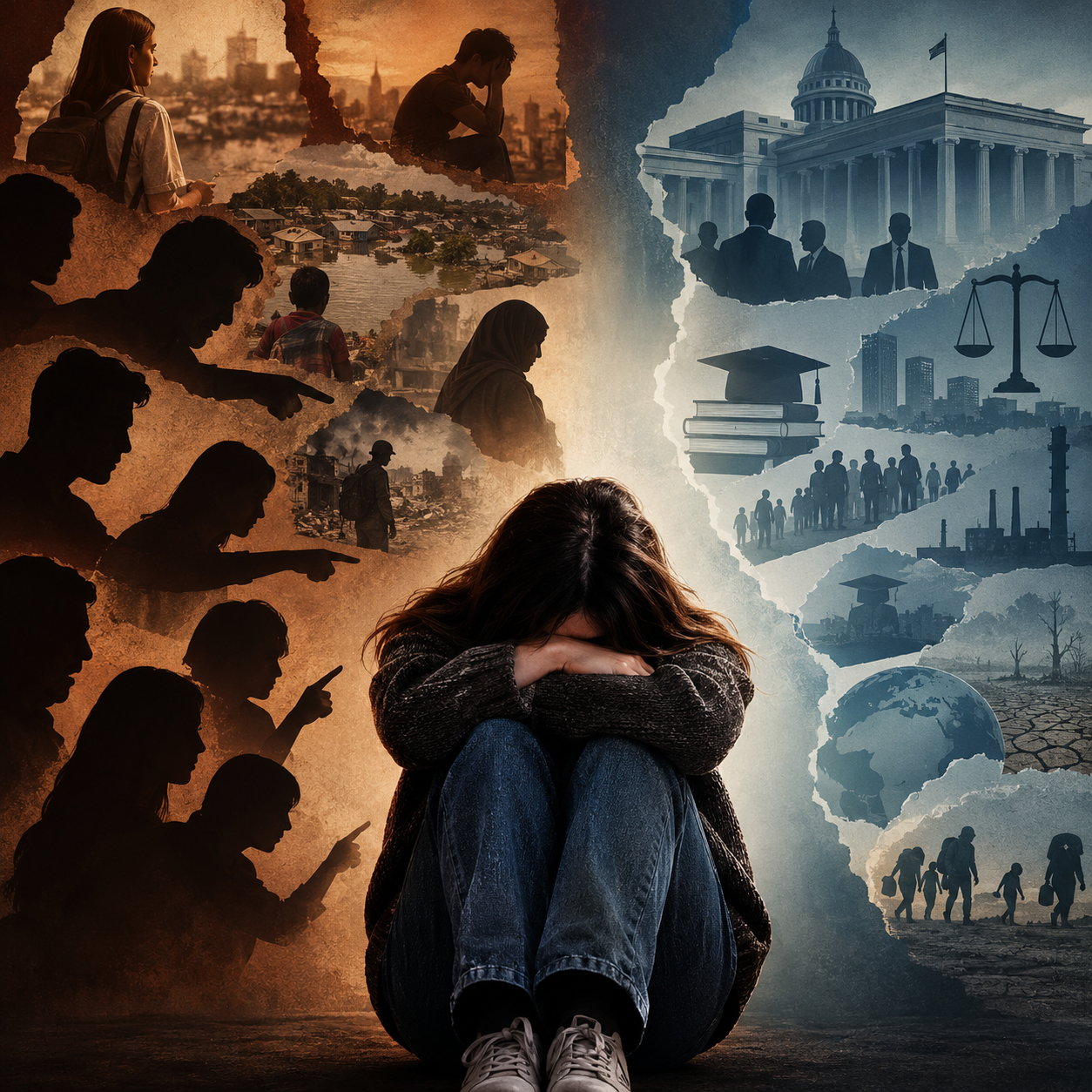
When a student fails, people may blame their lack of effort without considering the corrupt education system. When a person lives in poverty for a decade, people may label them as lazy or beggars without looking at the statistics of unemployment, inflation, and unequal opportunities that may have forced them to live in poverty. When a state faces a crisis, people may often blame the citizens, ignoring corruption, leadership, and institutional failure, which ultimately raises the concern of why individuals are often blamed for problems created by the system around them.
One psychological explanation is the just-world hypothesis. It suggests that people often want to believe the world is fair and that people generally get what they deserve. If we believe that bad things happen only when we make bad choices, we may feel safer and assume that good decisions can protect us. For example, when someone loses their job, people may blame that person for not being hardworking enough, while ignoring the company's economic crises, discrimination, and unemployment problems. Another explanation is the tendency to focus on individual behavior rather than circumstances. People often see and question what an individual did, but the forces affecting that person's behavior may be less visible or less discussed.
Victim blaming is also connected to gender stereotypes and patriarchal thinking. In a society where women are expected to protect family honor, their personal choices are judged more than men's actions. For example, after hearing about a woman being sexually assaulted, people might say she would not have been outside so late or start debating about the clothes she wore, even blaming the child for being murdered, ignoring the system that allows these sorts of crimes and the fact that the perpetrator chose to commit the crime. Victim blaming is more like a habit of criticizing the suffering of people while hiding inequality and poor accountability of the state. Whether we talk about poverty, unemployment, war, natural disasters, or murder or rape cases, the question remains the same: are we examining the real causes of the suffering or simply blaming the victims? A society that wants progress must look beyond individuals and examine the conditions the system fails to solve.
More from Writing
Deepfakes: A Double-Edged Sword in International Relations and Global Security:
Deepfakes have evolved from a digital nuisance into a real national security threat capable of fueling political and military crises. But could this same technology also help fight the misinformation it creates?
Read postFrom Cradle to Screens: Raising Tomorrow's Generation
Technology shapes childhood, but balance builds the future.
Read postThe New Oil: How Lithium and Rare Earths are Rewriting Global Power
For a century oil ruled the world, but now power has shifted to who controls lithium and rere Earth's processing.
Read post
Responses
Log in to comment and join the discussion.
Log in