The People Who Were Removed to Build a Military Base: The Chagos Islands
The Chagos Island turning into Military base.
Published 6 days ago
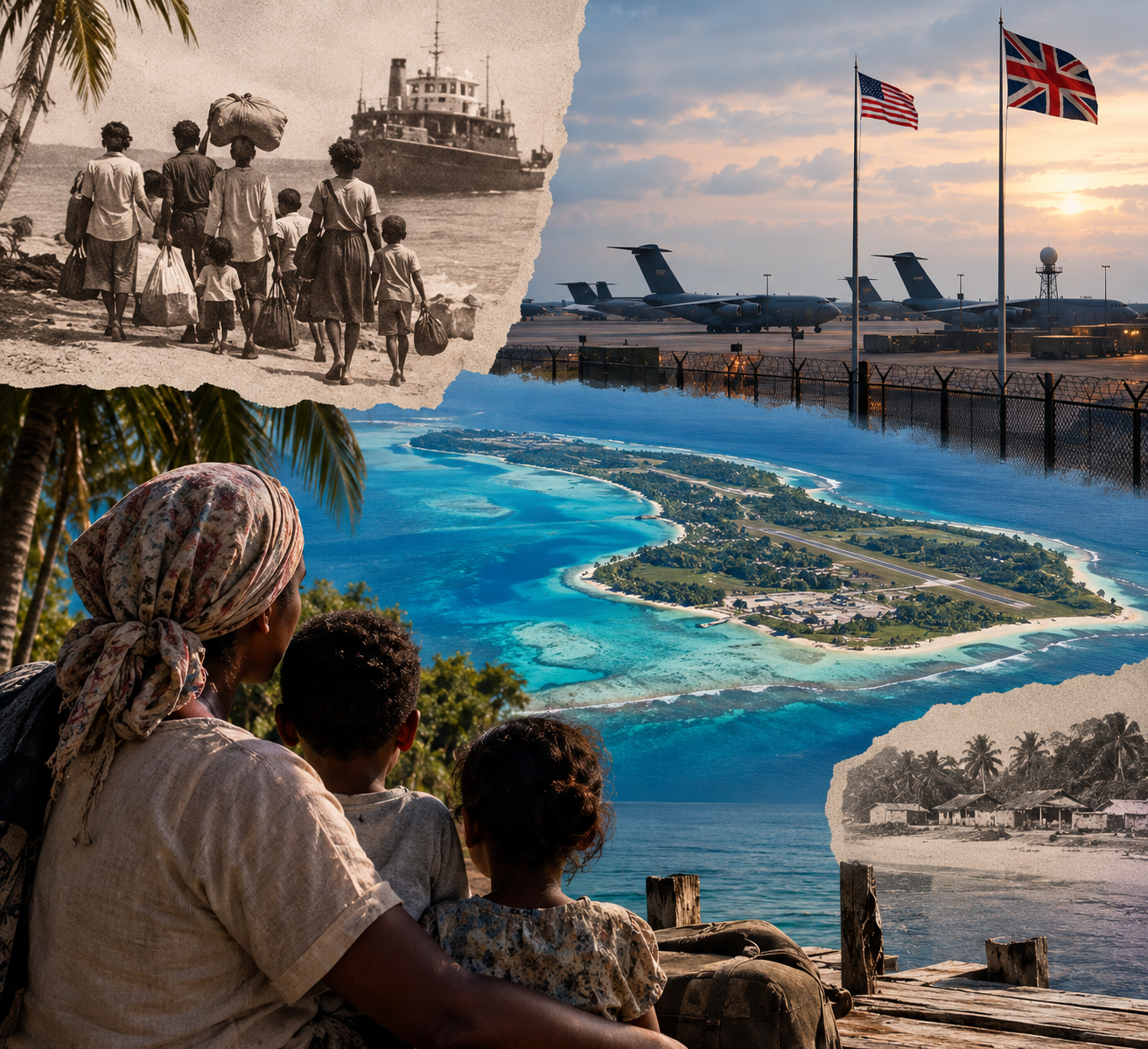
Imagine being born on a beautiful island surrounded by clear water. Your family has lived there for generations. You know the land, sea, and people around you. One day, you are told to leave your home just because the powerful states need the island for military purposes. For the people of Chagos Island, this was not just a dream; it became their harsh reality. The Chagos Archipelago is a group of islands in the Indian Ocean, where Diego Garcia later became a joint military site for the United Kingdom and the United States. In 1965, before Mauritius became independent, Britain separated the Chagos Archipelago from Mauritius and created the British Indian Ocean Territory. In 1966, Britain and the United States agreed to make the territory available for military purposes. The Chagossian people were forcibly removed between 1967 and 1973, with an estimated 1,400 to 2,000 people. Families had to leave behind their homes, communities, and way of life. For the governments, the base served strategic and defence interests. For the Chagossians, they lost not only their homes but also the place where their families had built their lives.
On 22 May 2025, the United Kingdom and Mauritius signed an agreement on the future of the Chagos Archipelago. Under the agreement, Mauritius would exercise sovereignty over the archipelago, while the United Kingdom would retain rights to operate the Diego Garcia military base for an initial 99-year period. The agreement was presented as a way to address the long-running sovereignty dispute while maintaining the base's strategic role. Yet it also raised questions among Chagossians. Some welcomed recognition of Mauritius' sovereignty and the possibility of resettlement. Others objected that the people most directly affected had not been sufficiently involved in decisions about their homeland. As of 2026, the agreement's implementation has faced political and legal obstacles, including the failure of the necessary UK legislation to complete its passage through Parliament during the 2025–2026 session and renewed US opposition. The agreement's future therefore remains uncertain.
More from Writing
Deepfakes: A Double-Edged Sword in International Relations and Global Security:
Deepfakes have evolved from a digital nuisance into a real national security threat capable of fueling political and military crises. But could this same technology also help fight the misinformation it creates?
Read postFrom Cradle to Screens: Raising Tomorrow's Generation
Technology shapes childhood, but balance builds the future.
Read postThe New Oil: How Lithium and Rare Earths are Rewriting Global Power
For a century oil ruled the world, but now power has shifted to who controls lithium and rere Earth's processing.
Read post
Responses
Log in to comment and join the discussion.
Log in