The Moro Conflict in the Philippines: Form Insurgency to Peace
the Moro conflict demonstrates how dialogue and self governances can help to build lasting peace.
Published 2 months ago
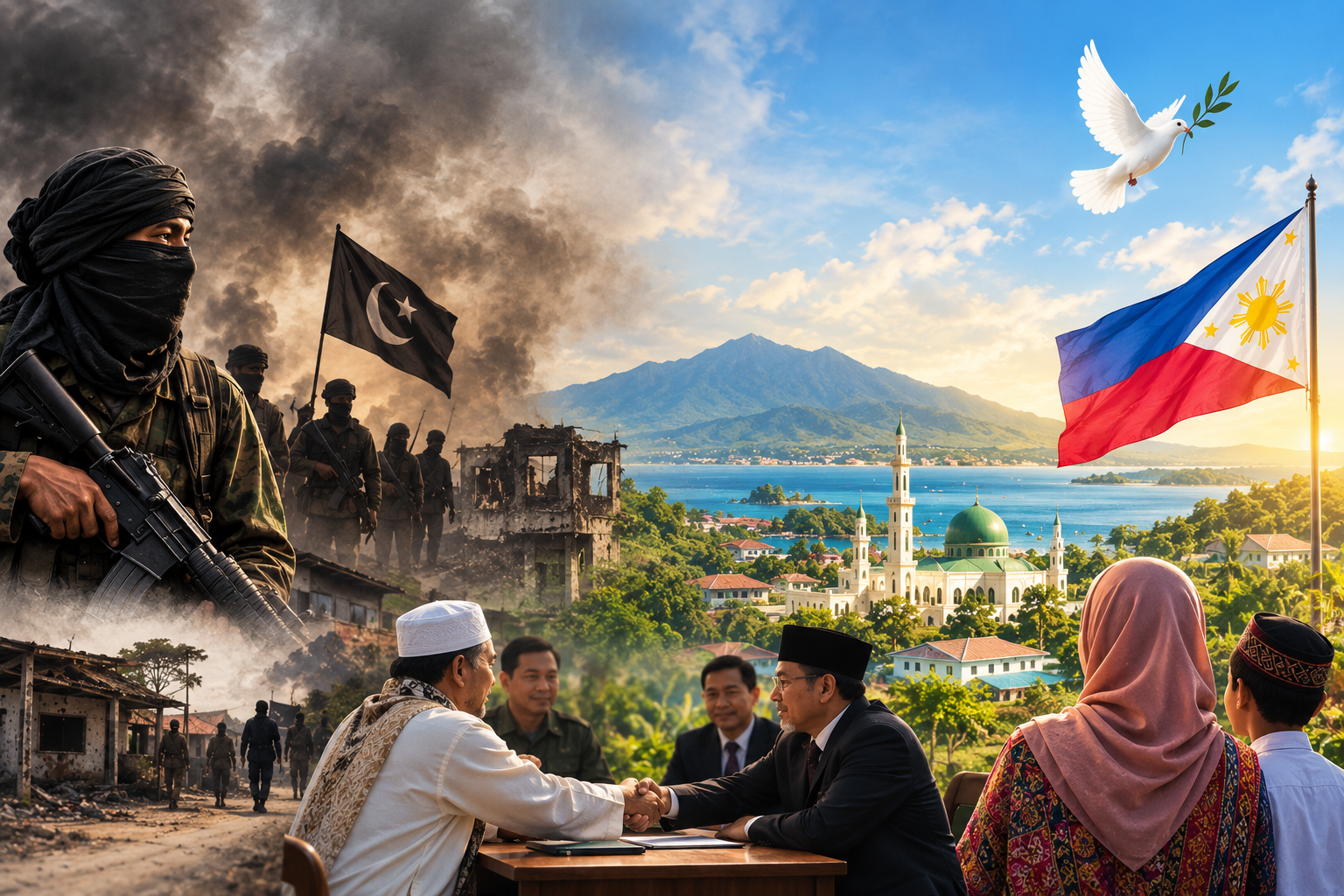
The Moro conflict in the southern Philippines represents a prolonged struggle between the Philippines governments and Muslim communities seeking greater self-determination now here has this been more evident than in Mindanao originated from deep rooted discontent regarding political exclusion, territorial diameter, economic inequalities cultural identity and demands for self-government for several decades military invention and violence failed to address these fundamental issues allowing the conflict to continue.
One of the key participants involved in the conflict was the Moro Islamic liberation front (MILF) which advocated greater self-governance for the Moro population. The conflict illustrates that low- intensity conflicts are often difficult because they involve not only security concerns but also social and political grievances. Consequently, military measures alone could not provide a sustainable solution.
Conflict resolution gradually shifts towards peaceful conflict resolution through dialogue and negotiations. Rather than depending completely on military strategies, the Philippine government and military strategies, to achieve a negotiated political settlement. A major milestone was the compressive agreement on the Bangsamoro (CAB) in 2014, which established a framework for greater autonomy and political representation. This agreement subsequently supported the formation of the Bangsamoro antimuons region in Muslim Mindanao (BARMM)
The Moro peace process utilizes that effective conflict resolution requires confronting the root causes of conflict while strengthening confidence between opposing parties. Negotiation, autonomy, power-sharing, reintegration, disarmament, inclusive governance and economic development can help to transform an armed conflict into a peaceful political process.
However, signing a peace does not depend on an agreement alone. Sustainable peace depends on effective implementation, protection of minority rights, economic opportunities and continuous dialogue among stakeholders. The Moro conflict demonstrates that lasting conflict resolution becomes more achievable when governments respond to the deeper political, economic and identity-based concerns of the community rather than depending only on military action.
More from Writing
Deepfakes: A Double-Edged Sword in International Relations and Global Security:
Deepfakes have evolved from a digital nuisance into a real national security threat capable of fueling political and military crises. But could this same technology also help fight the misinformation it creates?
Read postFrom Cradle to Screens: Raising Tomorrow's Generation
Technology shapes childhood, but balance builds the future.
Read postThe New Oil: How Lithium and Rare Earths are Rewriting Global Power
For a century oil ruled the world, but now power has shifted to who controls lithium and rere Earth's processing.
Read post
Responses
Log in to comment and join the discussion.
Log inWell-explained and backed by strong arguments.
Very well explained❤️