The Forgotten Conflict: Senegal and the Casamance Insurgency
Senegal and the Casamance Insurgency
Published 2 months ago
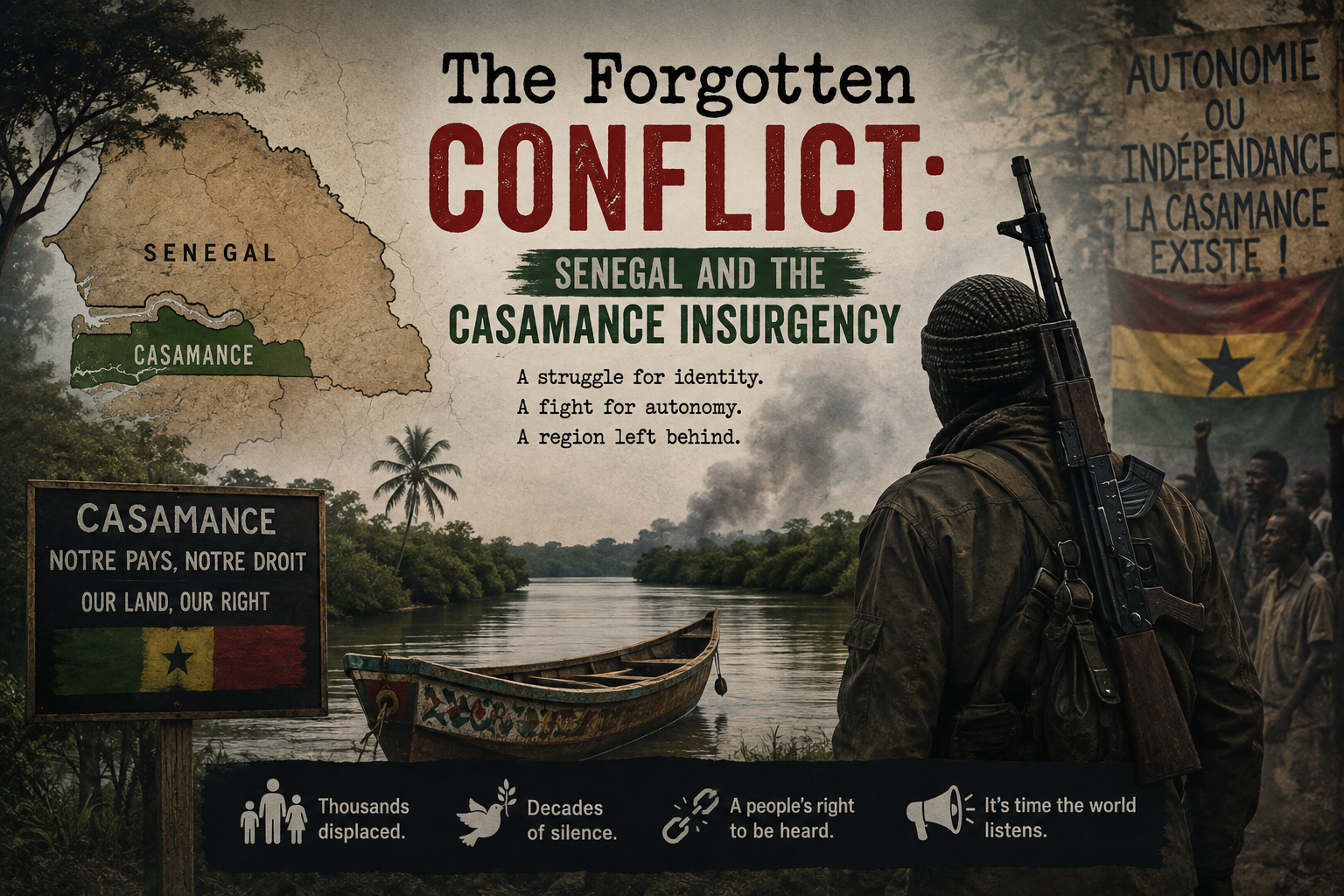
Casamance, a region in southern Senegal, has witnessed the longest armed conflict in Africa between the government and the rebel group, the Democratic Forces of Casamance (MFDC), which began in December 1982. They have been engaged in an open struggle for about 40 years. In the 1980s, when street protests broke out, the security forces suppressed them with brutality. The uprising began on 28 December 1982 when hundreds of people poured into Ziguinchor, replacing the Senegal tricolour with white flags, while handing out pamphlets supporting Casamance region independence. The conflict has caused thousands of people to be displaced and thousands of deaths, including civilians. After numerous failed negotiations, the conflict entered a series of operations conducted by the Senegalese army against the rebels, who are now focused on the illicit trade of goods such as timber and drugs rather than independence, which was the original cause of the conflict. In 2007, after years of fighting, MFDC was split into factions after the death of its commander, Augustin Diamacoune Senghor, and it’s member hide in the dense forests of the region. The Casamance region was considered the “Breadbasket of Senegal” because of its fertile land where rice, peanuts, and Cashews are produced, but the conflict slowed the region’s development. In 2025, the Senegalese Prime Minister Ousmane Sonko and the leader of the MFDC faction Cesar Atoute Bediate signed a peace deal in Guinea-Bissau. However, the powerful faction of rebels did not sign the deal, making peace across rebels incomplete. To stop the conflict, it is necessary to change the behavior of those who benefit from the illegal trade of rosewood. The growing of Indian hemp and the smuggling of rosewood in Gambia are closely related to the rebels. The region that was once considered the most prosperous in the state is now the least developed region in the country. Youth unemployment exceeds 50%, contributing to more and more reasons for people to migrate from Senegal to other states. Policymakers should care about the long-standing violence in Casamance. It should be noted that the region is sandwiched between Gambia and Guinea-Bissau, and the conflict is causing instability in these regions as well, suffered displacements and crimes as a result of the Casamance war. The stability process requires anti-corruption reforms, an independent judiciary and an end to the Casamance uprising, which continues to displace thousands of people, litter farmlands with explosive mines and weaken Senegal’s economy.
More from Writing
Deepfakes: A Double-Edged Sword in International Relations and Global Security:
Deepfakes have evolved from a digital nuisance into a real national security threat capable of fueling political and military crises. But could this same technology also help fight the misinformation it creates?
Read postFrom Cradle to Screens: Raising Tomorrow's Generation
Technology shapes childhood, but balance builds the future.
Read postThe New Oil: How Lithium and Rare Earths are Rewriting Global Power
For a century oil ruled the world, but now power has shifted to who controls lithium and rere Earth's processing.
Read post
Responses
Log in to comment and join the discussion.
Log inWell written
Well written
A thoughtful topic ,well written & well discussed 👌👏
Amazing analysis on the conflict that need discussion.
Well - discussed!
Very informative.