The Belt and Road Initiative and CPEC: Economic Cooperation, Soft Power, or Geopolitical Strategy
Billion-dollar corridors, scholarships, and strategic ports—is CPEC a game-changer for development or a geopolitical power move? Here is a breakdown of how China’s Belt and Road Initiative is reshaping global politics.
Published 2 days ago
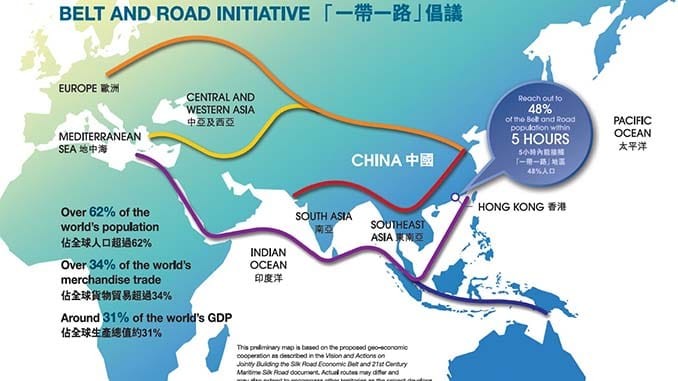
In twenty-first-century international politics, few initiatives have sparked as much debate as China’s Belt and Road Initiative (BRI). Launched in 2013 and covering dozens of countries across Asia, Europe, and Africa, this massive land and maritime network aims to reshape global connectivity and trade. At the center of this vision sits the China-Pakistan Economic Corridor (CPEC)—a flagship multi-billion-dollar project linking China’s western Xinjiang province to Pakistan’s Gwadar Port on the Arabian Sea.
The Liberal View: Economic Integration and Shared Development
Viewed through the lens of Liberal Institutionalism, the BRI represents a transformative model of South-South cooperation. Proponents argue that infrastructure deficits are one of the biggest barriers to growth in developing economies. By financing highways, railways, energy grids, and special economic zones, Beijing is addressing gaps that traditional Western-led institutions have often left underfunded.
For Pakistan, CPEC arrived at a critical moment when chronic energy shortages and weak transport infrastructure were holding back industrial growth. Through early-harvest energy projects and upgrades to routes like the Karakoram Highway, CPEC has sought to integrate Pakistan into wider regional supply chains. In theory, deeper economic interdependence promotes stability, reduces the risk of conflict, and creates a "win-win" environment where trade connectivity raises living standards across borders.
China’s Soft Power Push: Culture, Education, and People-to-People Ties
Beyond roads and power plants, the BRI also operates as a vehicle for Chinese soft power. As scholars Ayesha Siddique and Saeed Shafqat point out in their study on the BRI and CPEC, China approaches soft power differently from the traditional American model described by Joseph Nye. While Nye emphasized liberal democratic values, civil society, and pop culture, Chinese thinkers and policymakers emphasize economic development, non-interference, multilateralism, and cultural and educational exchanges.
Under the BRI and CPEC umbrella, this soft power is visible in expanding academic and people-to-people line
According to international surveys such as Pew Research, communities that see tangible economic benefits from China’s growth are significantly more likely to hold favorable views of Beijing. At the same time, some scholars (such as Waheed et al.) caution that educational and cultural cooperation can also create subtle discourse asymmetries, shaping how local institutions define development and partnership.
Overcoming the "Malacca Dilemma": Roughly 80% of China’s imported oil passes through the narrow Strait of Malacca, a maritime chokepoint vulnerable to blockades during a crisis. CPEC provides Beijing with a vital overland corridor, offering direct access to the Indian Ocean and the energy-rich Middle East via Gwadar.
The strategic impact of CPEC extends well beyond bilateral Pakistan-China relations. India has strongly opposed CPEC on sovereignty grounds because the corridor passes through Gilgit-Baltistan, part of the disputed Kashmir region. As a result, New Delhi ha
In contemporary world politics, treating economic cooperation and geopolit
For Pakistan, CPEC offers real opportunities for industrialization, regional trade, and human-capital development. Yet turning China’s economic and educational outreach into lasting national strength depends on transparent governance, sustainable debt management, internal security, and equipping local workers with long-term technical skills.
More from Writing
Deepfakes: A Double-Edged Sword in International Relations and Global Security:
Deepfakes have evolved from a digital nuisance into a real national security threat capable of fueling political and military crises. But could this same technology also help fight the misinformation it creates?
Read postFrom Cradle to Screens: Raising Tomorrow's Generation
Technology shapes childhood, but balance builds the future.
Read postThe New Oil: How Lithium and Rare Earths are Rewriting Global Power
For a century oil ruled the world, but now power has shifted to who controls lithium and rere Earth's processing.
Read post
Responses
Log in to comment and join the discussion.
Log in