Soft Power: How Countries Influence the World Without Force
Discover how culture, diplomacy, education, and reputation help nations shape global relationships without relying on pressure or military force.
Published 1 month ago
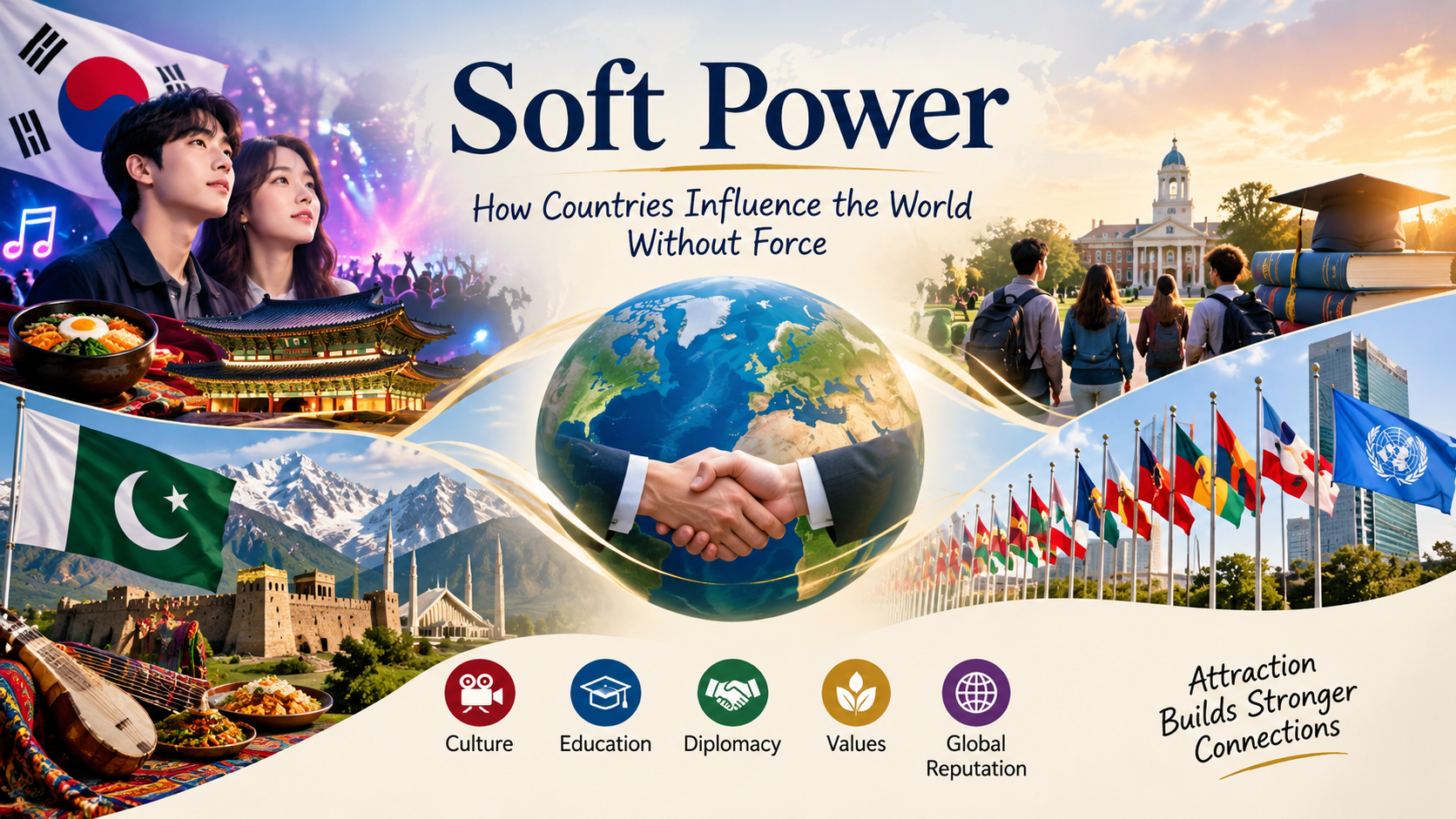
When we think about power in international relations, the first things that usually come to mind are armies, weapons, and money. But not every country tries to influence others through pressure. Sometimes, attraction and good relationships can be just as important. This is where soft power comes in.
Soft power is the ability of a country to influence others through attraction rather than force or pressure. The concept was introduced by American political scientist Joseph Nye. According to this idea, countries can gain influence through their culture, values, foreign policies, education, diplomacy, and international reputation.
Culture is one of the most visible sources of soft power. Movies, music, food, fashion, sports, and literature can introduce a country to people around the world. South Korea is a clear example. Korean dramas and K-pop have become popular internationally, making people more interested in Korean culture, language, and lifestyle. This influence develops naturally because people choose to engage with it.
Education and student exchanges can also create strong connections. When students study in another country, they experience its society and culture closely. These experiences can create friendships and professional relationships that continue for years. In this way, education can become a bridge between nations.
Diplomacy is another important part of soft power. Countries can build trust by cooperating with others, supporting humanitarian causes, participating in international organizations, and maintaining positive diplomatic relations. A country that is seen as trustworthy and respectful may find it easier to build partnerships.
Pakistan also has opportunities to use soft power. Its rich history, literature, music, food, hospitality, sports, tourism, and cultural diversity can help improve its international image. Educational cooperation and peaceful diplomatic engagement can also strengthen Pakistan’s relationships with other countries.
However, soft power cannot be created through publicity alone. A country’s actions matter because its international image depends partly on whether its behavior matches the values it presents. Building influence therefore takes time, consistency, and credibility.
In the modern world, power is not only about military strength. Countries can also influence global attitudes by sharing their culture, building relationships, and earning trust. Soft power reminds us that sometimes the strongest influence is the kind people willingly accept.
More from Writing
Deepfakes: A Double-Edged Sword in International Relations and Global Security:
Deepfakes have evolved from a digital nuisance into a real national security threat capable of fueling political and military crises. But could this same technology also help fight the misinformation it creates?
Read postFrom Cradle to Screens: Raising Tomorrow's Generation
Technology shapes childhood, but balance builds the future.
Read postThe New Oil: How Lithium and Rare Earths are Rewriting Global Power
For a century oil ruled the world, but now power has shifted to who controls lithium and rere Earth's processing.
Read post
Responses
Log in to comment and join the discussion.
Log in