Soft power
Soft power is the ability of a country to influence others through culture, values, ideas, and attraction instead of force. It plays an important role in building international relations and cooperation.
Published 1 month ago
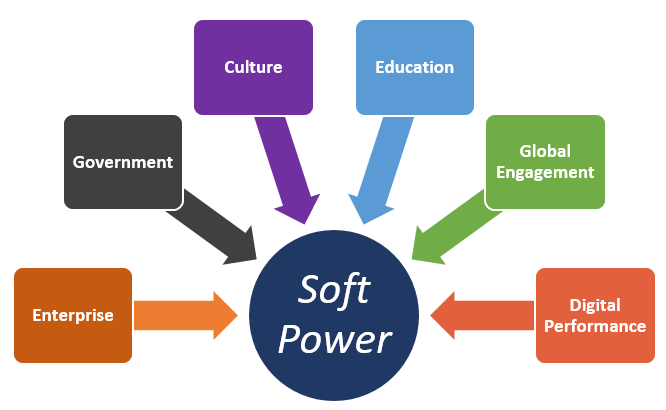
Soft Power in International Relations
In international relations, countries use different ways to influence other countries. Usually, we think of military and economic power, but countries can also influence others through soft power. Soft power means the ability of a country to attract and influence others through its culture, values, education, media, and diplomacy instead of using force.
Culture is an important part of soft power. Movies, dramas, music, food, fashion, and sports can create a positive image of a country. For example, South Korean dramas and music have become popular around the world. This has helped people become more interested in Korean culture and society.
Education is another important source of soft power. Universities and scholarships can bring students from different countries together. When international students study in a country, they learn about its culture and society. After returning home, they may share their experiences with others.
Diplomacy also plays an important role. Countries build friendly relationships through meetings, international organizations, cultural exchanges, and cooperation. A country that is seen as helpful and trustworthy may have more influence in international affairs.
Media and social media have also made soft power more important. Countries can use digital platforms to communicate directly with people around the world. This allows them to share their culture, ideas, achievements, and national identity.
Soft power is different from hard power. Hard power depends mainly on military strength and economic pressure, while soft power depends on attraction and cooperation. Both can be important in international relations.
For Pakistan, soft power can also be developed through its culture, historical heritage, tourism, sports, food, arts, and education. Promoting these areas can help create a better understanding of Pakistan internationally.
In conclusion, soft power has become an important part of modern international relations. In today's connected world, countries do not only compete through military or economic strength. They also try to attract people and build positive relationships. Therefore, culture, education, diplomacy, and communication can play an important role in a country's position in the world.
Which factor is most important for a country’s soft power
More from Writing
Deepfakes: A Double-Edged Sword in International Relations and Global Security:
Deepfakes have evolved from a digital nuisance into a real national security threat capable of fueling political and military crises. But could this same technology also help fight the misinformation it creates?
Read postFrom Cradle to Screens: Raising Tomorrow's Generation
Technology shapes childhood, but balance builds the future.
Read postThe New Oil: How Lithium and Rare Earths are Rewriting Global Power
For a century oil ruled the world, but now power has shifted to who controls lithium and rere Earth's processing.
Read post
Responses
Log in to comment and join the discussion.
Log in