POWER IN INTERNATIONAL RELATIONS
Power in International Relations is a country's ability to influence others through military, economic, technological, diplomatic, and cultural strength.
Published 1 month ago
INTRODUCTION:
Power in International Relations (IR) is the ability of a country to influence others and achieve its goals. It includes military strength, economic power, technology, diplomacy, culture, and reputation.
HOW POWER SHAPES INTERNATIONAL RELATIONS:
Countries use various forms of power to protect national interests.
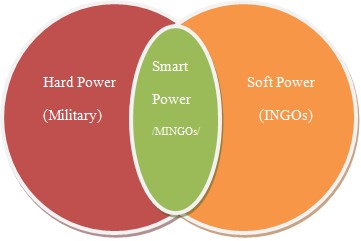
Hard Power:
Hard power means using military force or economic pressure. For example, a country may use military strength to prevent an attack or sanctions to pressure another country.
Soft Power:
Soft power means influencing others through attraction rather than force. Culture, education, values, sports, movies, music, and foreign policy can encourage cooperation.
Smart Power:
Smart power combines hard and soft power. A country may use military capabilities for security while using diplomacy to gain support.
WHAT MAKES A COUNTRY POWERFUL?
Strong Geography and Territory:
Location, territory, oceans, trade routes, and natural barriers can provide strategic advantages.
People and Resources:
A skilled population provides workers, professionals, and military manpower. Oil, gas, minerals, water, and forests can increase national potential.
Money and Industry:
A strong economy helps a country invest in military, technology, infrastructure, education, and diplomacy. Strong industries reduce dependence on foreign suppliers.
Military and Technology:
Military strength helps defend a country and deter threats. AI, cyber capabilities, satellites, advanced computing, and biotechnology are important.
THE POWER PEOPLE CANNOT SEE:
Good Leadership:
Effective leaders use resources wisely and develop strategies for national interests.
Political Stability:
Stable institutions help countries maintain consistent policies.
Diplomacy:
Negotiation, alliances, mediation, and international cooperation can increase influence.
Culture and Reputation:
Music, films, food, sports, education, traditions, and language can create attraction. A good reputation can encourage cooperation.
EXAMPLE: CHINA AND INTERNATIONAL POWER
China shows how various sources of power work together. Its large population and territory provide resources, while its economy and industries support trade and development. Technology and military capabilities add strategic strength, while diplomacy and relationships increase influence.
CONCLUSION:
Power is not simply about having the biggest army or most money. It is about using resources effectively to influence others and achieve national goals. Economic, military, technological, political, geographical, cultural, and diplomatic capabilities all contribute to national power.
More from Writing
Deepfakes: A Double-Edged Sword in International Relations and Global Security:
Deepfakes have evolved from a digital nuisance into a real national security threat capable of fueling political and military crises. But could this same technology also help fight the misinformation it creates?
Read postFrom Cradle to Screens: Raising Tomorrow's Generation
Technology shapes childhood, but balance builds the future.
Read postThe New Oil: How Lithium and Rare Earths are Rewriting Global Power
For a century oil ruled the world, but now power has shifted to who controls lithium and rere Earth's processing.
Read post
Responses
Log in to comment and join the discussion.
Log in