Our Oceans,
Our oceans connect us all. In 2026, international cooperation is essential to reduce pollution, protect marine biodiversity, and build a healthier future for generations to come.
Published 1 month ago
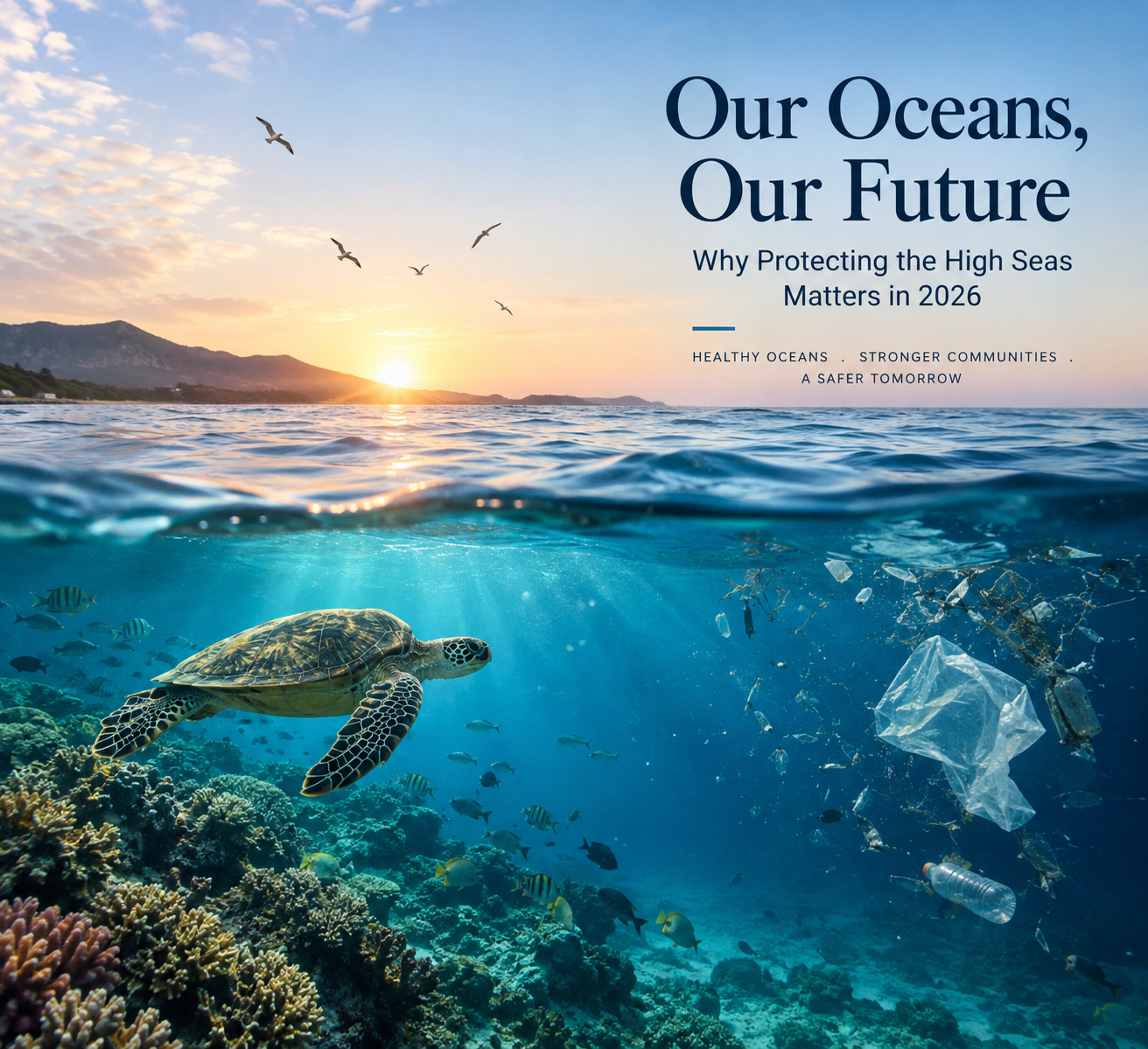
Our Oceans, Our Future: Why Protecting the High Seas Matters in 2026
The ocean covers more than 70 percent of our planet and plays a vital role in supporting life on Earth. It provides food, supports millions of livelihoods, regulates the climate, and connects countries through trade and transportation. However, oceans are facing increasing pressure from climate change, pollution, overfishing, and biodiversity loss. In 2026, protecting the ocean has become an important global responsibility.
A Changing Ocean
Climate change is affecting marine environments in several ways. Rising temperatures are warming the ocean, while melting ice and the expansion of warmer seawater contribute to rising sea levels. These changes can damage marine ecosystems and affect coastal communities.
The United Nations’ Third World Ocean Assessment, released in 2026, brought together the work of nearly 600 experts from 86 countries. It highlighted climate change, pollution, biodiversity loss, and increasing human activities as major pressures on marine ecosystems. This shows that ocean protection requires scientific knowledge as well as international cooperation.
Why International Cooperation Matters
Many areas of the ocean are beyond the national jurisdiction of individual countries. These areas are commonly known as the high seas. Because no single country controls them, protecting their biodiversity requires countries to work together.
An important development came in January 2026, when the Biodiversity Beyond National Jurisdiction (BBNJ) Agreement entered into force. The agreement provides an international legal framework for conserving and sustainably using marine biodiversity in areas beyond national jurisdiction.
This development demonstrates why international agreements matter. Marine species, ocean currents, and pollution do not follow political borders. Actions in one part of the ocean can affect ecosystems and communities in another part of the world.
The Growing Problem of Plastic Pollution
Plastic pollution is another major challenge. Plastic waste can travel through rivers and ocean currents, meaning that waste produced in one place can eventually affect distant coastal areas.
Marine animals may become trapped in plastic or mistake it for food. Plastic pollution can also affect fisheries, tourism, and coastal economies. Addressing this problem requires cooperation between governments, industries, scientists, and communities.
Countries can reduce plastic pollution by improving waste-management systems, limiting unnecessary single-use plastics, increasing recycling, and developing stronger international policies.
What Can Be Done?
Protecting the ocean requires practical action. Countries can expand marine protected areas, improve sustainable fisheries management, reduce pollution, share scientific information, and invest in ocean research. Developing countries also need access to financial resources and technology so that they can protect their marine environments while supporting local communities.
Individuals have a role as well. Reducing plastic use, disposing of waste responsibly, avoiding unnecessary consumption, and supporting environmentally responsible practices can contribute to healthier oceans.
A Shared Responsibility
The ocean connects people, economies, and ecosystems across the world. Its condition affects not only marine life but also food security, climate, employment, and human wellbeing.
The developments of 2026 show that protecting the ocean is increasingly becoming a shared international responsibility. No country can solve the problem alone. Through cooperation, scientific research, responsible policies, and individual action, countries can work toward a healthier and more sustainable ocean.
Protecting the ocean means protecting a major part of our planet—and ultimately, protecting our own future.
More from Writing
Deepfakes: A Double-Edged Sword in International Relations and Global Security:
Deepfakes have evolved from a digital nuisance into a real national security threat capable of fueling political and military crises. But could this same technology also help fight the misinformation it creates?
Read postFrom Cradle to Screens: Raising Tomorrow's Generation
Technology shapes childhood, but balance builds the future.
Read postThe New Oil: How Lithium and Rare Earths are Rewriting Global Power
For a century oil ruled the world, but now power has shifted to who controls lithium and rere Earth's processing.
Read post
Responses
Log in to comment and join the discussion.
Log in