National interest:
Explore how national interest shapes international relations, influences foreign policy, protects national security, and drives global cooperation and competition through real-world examples.
Published 1 day ago
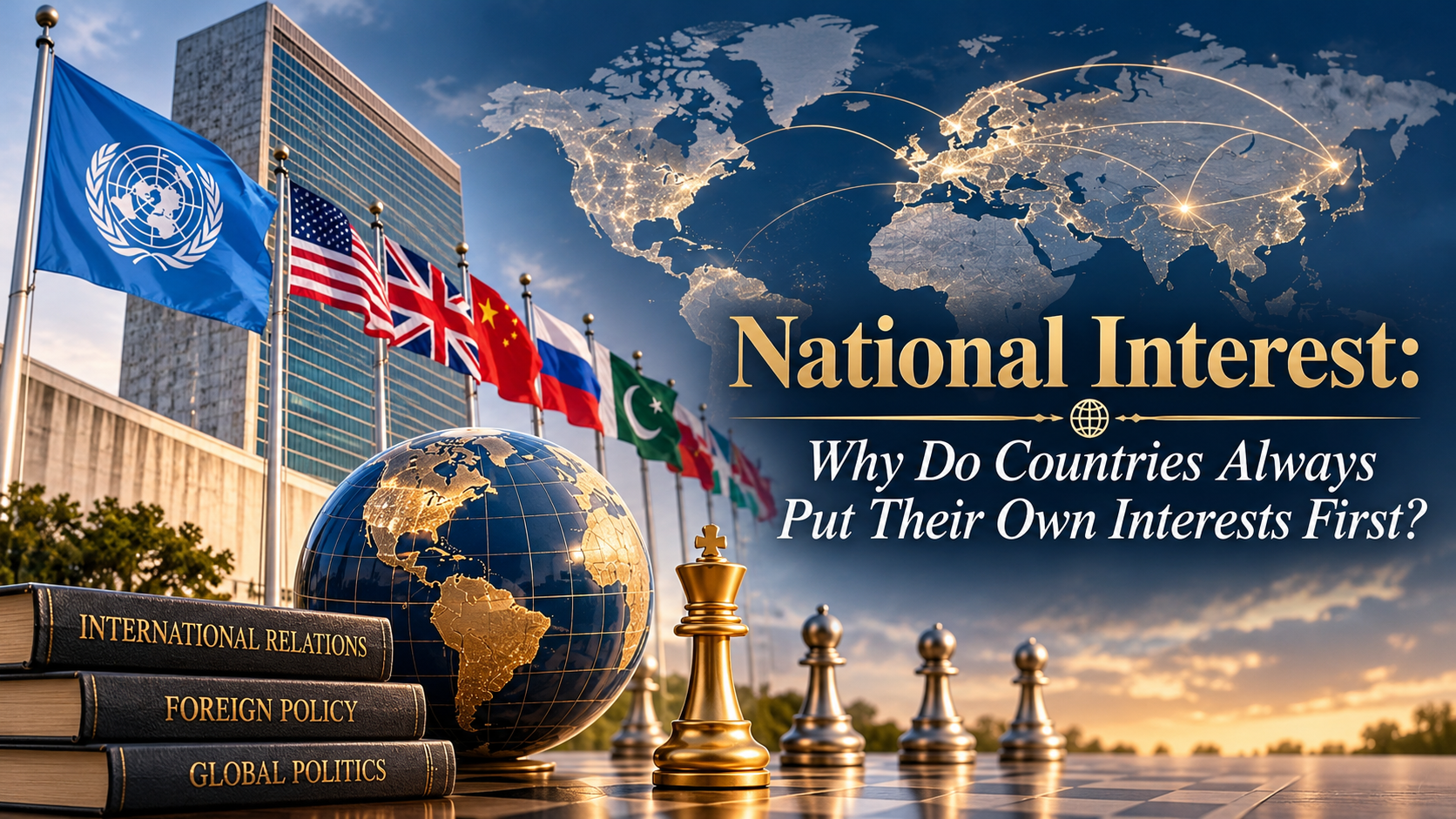
Why Do Countries Always Put Their Own Interests First?
Understanding the Role of National Interest in International Relations
Imagine a world where every country is trying to become stronger, safer, and more successful. Nations build friendships, sign agreements, support one another, and sometimes compete against each other. But have you ever wondered why countries make certain decisions? Is it because of friendship, trust, or simply because they have something to gain?
The answer often lies in one important concept: National Interest.
What Is National Interest?
National interest refers to the goals and priorities that a country wants to achieve to protect its people, territory, economy, and independence. In simple words, it means giving importance to the country’s needs and benefits.
Every country has its own national interests. Some focus on economic development, while others give more importance to national security, political stability, and international influence. These interests guide countries when making important decisions at the national and international levels.
Why Is National Interest Important?
National interest plays an important role in International Relations because it helps countries decide what actions are best for their future.
The major objectives of national interest include:
1. National Security: Protecting the country from external threats and ensuring the safety of its people.
2. Economic Development: Improving trade, business, investment, and employment opportunities.
3. Political Stability: Maintaining peace and a stable political system within the country.
4. Territorial Protection: Protecting national borders, land, and independence.
5. International Influence: Building strong relationships and improving a country’s position in the world.
These objectives help countries protect their interests and work towards a better future.
Types of National Interest
National interest can be divided into different types according to a country’s goals and priorities.
1. Primary Interests
These are the most important interests of a country. They include protecting national independence, territory, and security.
2. Secondary Interests
These include protecting citizens living abroad, improving diplomatic relations, and supporting international cooperation.
3. Permanent Interests
These are long-term interests that remain important over many years, such as national security and economic stability.
4. Variable Interests
These interests may change according to political conditions, government policies, leadership, and international situations.
Relationship Between National Interest and Foreign Policy
National interest and foreign policy are closely connected. National interest explains what a country wants to achieve, while foreign policy explains how it deals with other countries to achieve those goals.
For example, when two countries sign a trade agreement, they may want to improve their economies and create better opportunities for their people.
Similarly, countries develop alliances and diplomatic partnerships to strengthen their security and international position. This shows that national interest plays an important role in shaping foreign policy.
National Interest in the Real World
National interest is not just a concept discussed in books. We can see it in the decisions and actions of countries around the world.
Pakistan and China
Pakistan and China have developed strong relations through trade, infrastructure, economic cooperation, and the China-Pakistan Economic Corridor (CPEC). Both countries cooperate to achieve important economic and strategic goals.
United States
The United States focuses on protecting its national security, strengthening its economy, and maintaining its international influence through foreign policy and global partnerships.
China
China gives importance to economic growth, international trade, technological development, and regional security to strengthen its position in the world.
These examples show that countries often cooperate when their national interests are similar.
When National Interests Clash
Although national interest encourages cooperation, it can also become a reason for disagreements and conflicts between countries.
Sometimes two nations have different goals or compete for the same resources, territory, economic benefits, or political influence. These differences can create tensions in international relations.
For example, border disputes, competition over natural resources, and trade disagreements can affect relations between countries.
This is why diplomacy, negotiation, and international organizations are important. They help countries resolve their differences peacefully and maintain international stability.
A Thought to Remember
National interest does not always mean choosing power over peace or benefits over friendship. Countries can protect their own interests while also cooperating with others.
When nations understand each other’s needs and respect their differences, they can build stronger relationships and create opportunities for mutual growth.
Conclusion
National interest is one of the most important concepts in International Relations. It explains why countries make certain decisions, build alliances, develop trade relations, and sometimes compete with one another.
Every country wants to protect its identity, improve its economy, ensure the safety of its people, and secure a better future.
In international relations, friendships and governments may change, but national interest remains an important guide behind a country’s decisions.
More from Writing
Deepfakes: A Double-Edged Sword in International Relations and Global Security:
Deepfakes have evolved from a digital nuisance into a real national security threat capable of fueling political and military crises. But could this same technology also help fight the misinformation it creates?
Read postFrom Cradle to Screens: Raising Tomorrow's Generation
Technology shapes childhood, but balance builds the future.
Read postThe New Oil: How Lithium and Rare Earths are Rewriting Global Power
For a century oil ruled the world, but now power has shifted to who controls lithium and rere Earth's processing.
Read post
Responses
Log in to comment and join the discussion.
Log in