From Insurgency to Political resolution: The Mindanao Conflict and the Search for a Sustainable state Settlement.
From Low-Intensity War to Peace: The Bangsamoro Journey
Published 2 months ago
The Island of Mindanao, located in the southern Philippines has endured one of the longest armed conflicts for over four decades of political grievances, systematic discrimination, human casualties, and generational trauma. The conflict arises from the historical discrimination of Moro (Muslim) people encompassing identity, land eviction and systematic exclusion by the Philippine state.
The origins of the Mindanao conflict are deeply rooted in the distinct ethno-cultural identity of the Bangsamoro people, who remained under Spanish colonial rule for over 3 centuries while maintaining their own autonomous sultanates even before the concept of unified Philippine state. However, Islam, customary governance and ancestral land formed the foundation the Moro people sought to protect.
The American colonial role and Philippine independence in 1946 further intensified the grievances of Moro people as governments launched systematic resettlement programs encouraging Christian migration to the South Philippine region, gradually marginalizing Muslims into a minority in their own homeland. At the same time, the state appropriation of ancestral territories, forced incorporation, entrenching resentment and suppression of identity. These dynamics lead to the emergence of armed insurgency. Additionally, the 1968 Jabidah massacre contributed to the formation of an organized rebellion known as Moro National Liberation Front (MNLF) under the Nur Misuari in 1972 campaign for independence. Later, the organization shifted towards an Islamic-centered ideology under Hashim Salamat as Moro Islamic Liberation Front (MILF). The years of government-insurgent prolonged conflict undermined Mandiano’s economy and deepened the cycle of mass displacement, fragility and militarization.
The transition from armed conflict to peace was a gradual and challenging process shared by both major breakthroughs and difficulties. The 1976 Tripoli Agreement sought to institutionalize autonomy across 13 provinces. However, lack of implementation undermined the agreement and its success. Subsequently, the 1996 final peace agreement with the MNLF marked a crucial turning point towards autonomy through the creation of the Autonomous Region in Muslim Mindanao (ARMM). However, it again failed due to corruption, weak governance, institutional shortcomings, and faced extensive criticism as a “failed experiment”.
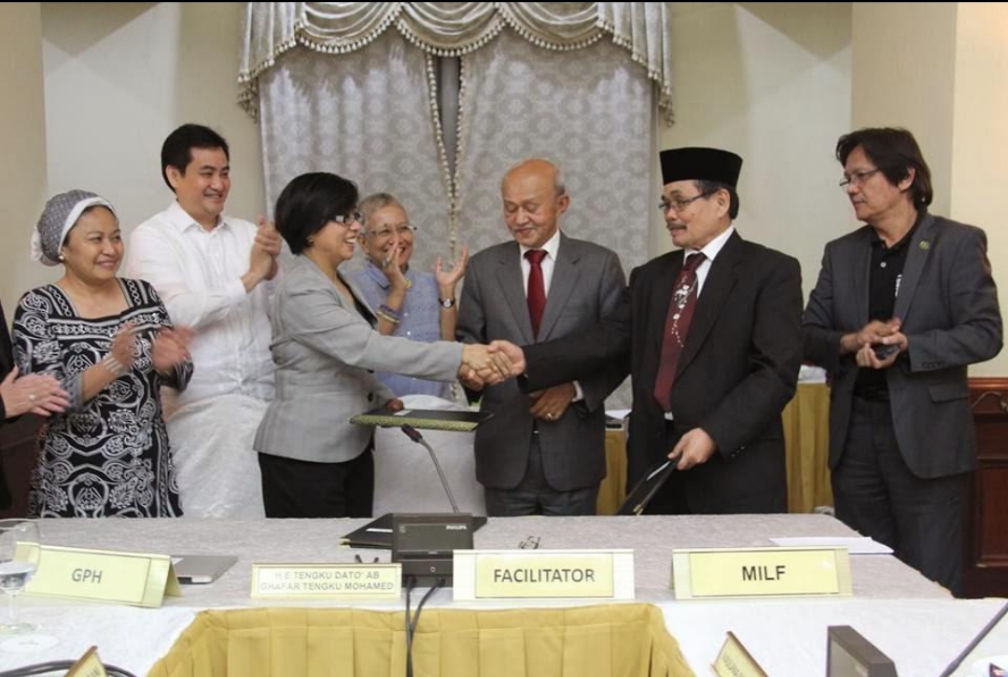
After many years of negotiations, the MILF then became the central focus of the peace talk. Following the Supreme Court’s decision to invalidate the 2008 Memorandum on Ancestral Domain, the peace process faced a major setback before momentum was restored. At a later stage, the 2012 Framework agreement on the Bangsamoro created the path for a new phase of peace process and eventually resulted in the landmark 2014 Comprehensive Agreement on the Bangsamoro (CAB) with the formation of the Banksamoro Autonomous Region, the governance shifted from ARMM through increased fiscal autonomy, a parliamentary system and a greater recognition of Moro identity. Thus far, the process has indicated a significant and successful momentum from armed insurgency towards a lasting peace and reconciliation.
More from Writing
Deepfakes: A Double-Edged Sword in International Relations and Global Security:
Deepfakes have evolved from a digital nuisance into a real national security threat capable of fueling political and military crises. But could this same technology also help fight the misinformation it creates?
Read postFrom Cradle to Screens: Raising Tomorrow's Generation
Technology shapes childhood, but balance builds the future.
Read postThe New Oil: How Lithium and Rare Earths are Rewriting Global Power
For a century oil ruled the world, but now power has shifted to who controls lithium and rere Earth's processing.
Read post
Responses
Log in to comment and join the discussion.
Log inWell-researched and clearly articulated.
Well explained
Well written
Excellent work ♥️👍
Good analysis
Very informative and well researched
Strongly written, emotionally impactful and balanced in representing the complexities and conflicts b/w states.
Very informative and well written..✨