DIPLOMACY IN ISLAM
Diplomacy in Islam teaches us the importance of peace, justice, honesty, and respectful dialogue. The examples of the Prophet Muhammad (PBUH) show how peaceful negotiation can help build understanding a
Published 1 month ago
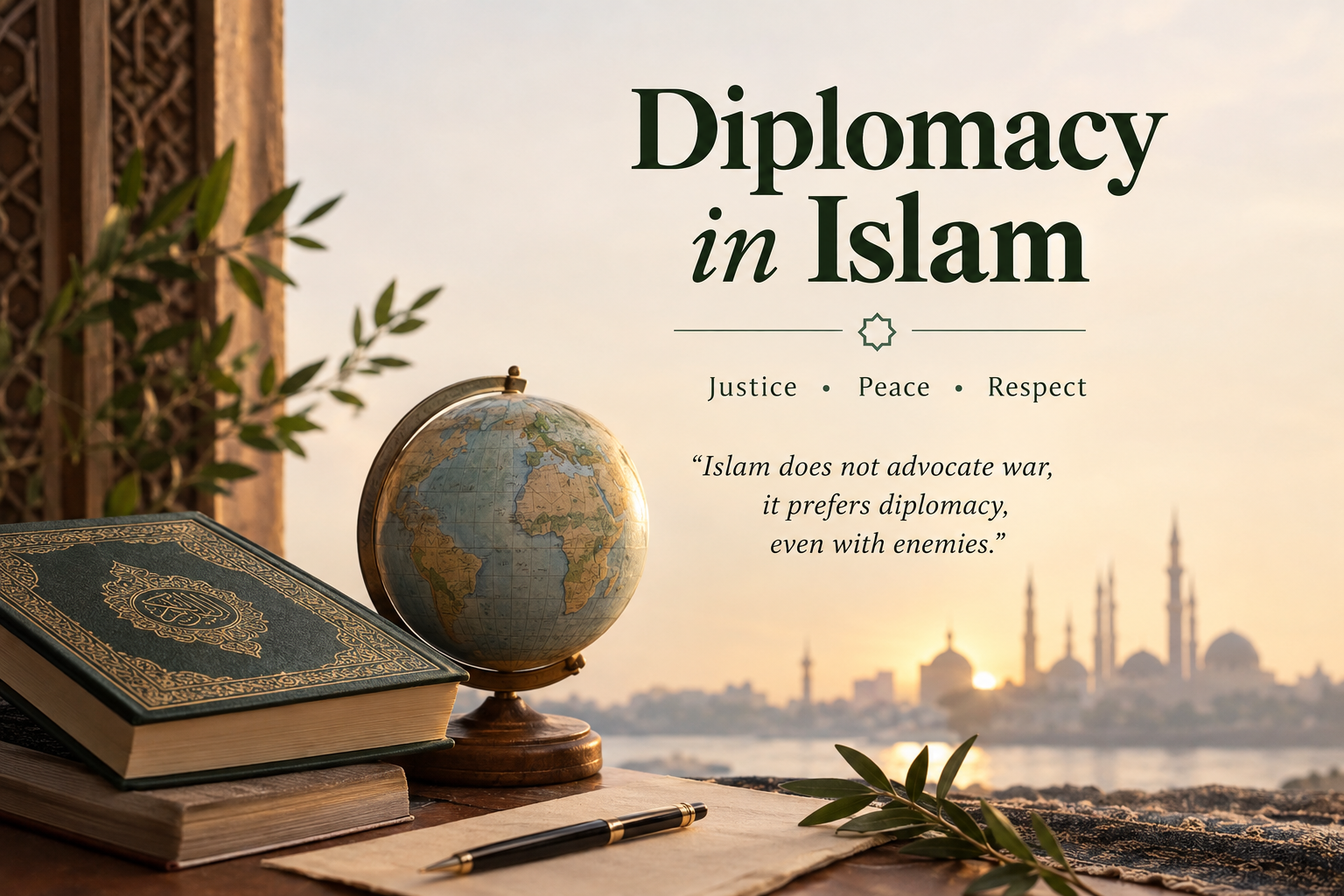
Diplomacy is an essential element of the relationship between countries, communities and individuals. At the same time, diplomacy in Islam is not limited to state-to-state relationships but is also manifested in interpersonal relationships. Moreover, diplomacy in Islam is directly related to justice, peace, honesty, respect, and fair conflict resolution. The religious leaders Islam have consistently promoted tolerance and respect for others communities while also reserving the right to protect their own community.
The Prophet Muhammad practiced what is preached, conducting many diplomatic activities with representatives of various tribes. In particular, the Treaty of Hudaybiyyah is a brilliant example of how the Prophet and his community, he agreed to them to bring Muslims and Jews together. This example of diplomacy demonstrates that achieving global goal often requires concessions and a calm assessments of a current realities. In addition, the Charter of Madinah, which was also drawn up by the Prophet Muhammad, is another example of excellent diplomacy. By agreement with the leaders of the vocal localities, a document was drawn up that ensured order and security within all communities. All residents of Madinah were obliged to follow the terms of the charter, which contributed to the establishment of good relations between different social groups.
In Islam, fair and honest dealings with others are encouraged, as are honoring agreement and not reneging on promises without a valid reasons. The Quran advises its followers to pursue peace, even if it means suffering at the hand of enemies who have wronged them. This confirm once again that Islam does not advocate wars but prefers diplomacy, even with enemies.
To achieve diplomatic success in personal and professionals relationships, Muslim are encouraged to use communication and consultation rather than confrontation. Peaceful negotiations help to find a common ground and solve any problem, even between countries. These principles can and should be applied in all areas of life, including international affairs.
Today, world politics faced with many problem that require a diplomatic approach to their solution. In particular, international issues such as political conflicts, security issues, trade, territorial disputes, and refugee problem require a coordinate approach. However the principles of Islam, which are built on justice, honesty, respect, and fair conflict resolution, can be applied to solve any problems, including international ones.
More from Writing
Deepfakes: A Double-Edged Sword in International Relations and Global Security:
Deepfakes have evolved from a digital nuisance into a real national security threat capable of fueling political and military crises. But could this same technology also help fight the misinformation it creates?
Read postFrom Cradle to Screens: Raising Tomorrow's Generation
Technology shapes childhood, but balance builds the future.
Read postThe New Oil: How Lithium and Rare Earths are Rewriting Global Power
For a century oil ruled the world, but now power has shifted to who controls lithium and rere Earth's processing.
Read post
Responses
Log in to comment and join the discussion.
Log in