A War Fought Far Away, But Ordinary People Pay the Cost with an Empty Plate
The Russia‑Ukraine war disrupted food supplies, causing shortages and rising prices, showing how conflict impacts ordinary people globally.
Published 2 months ago
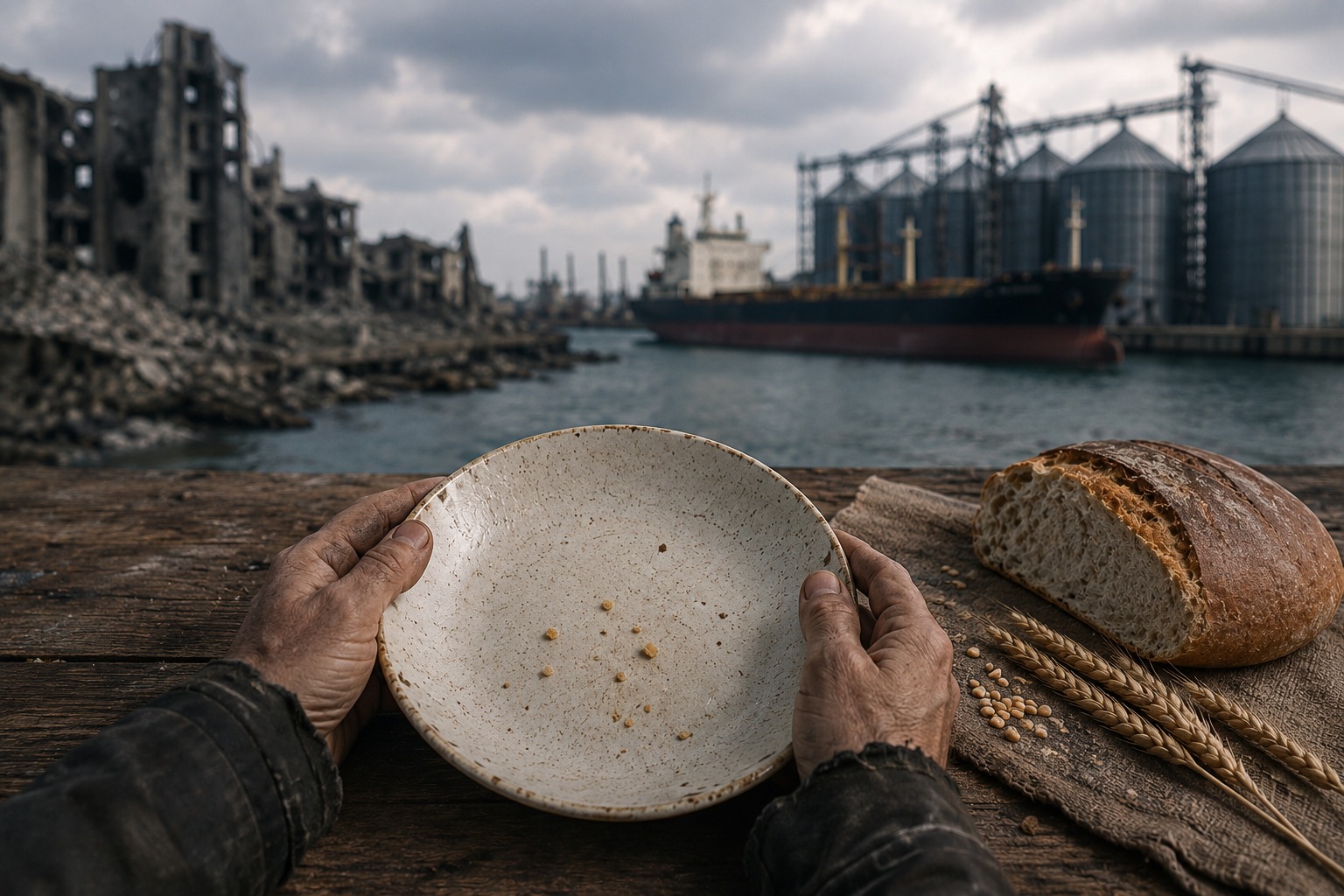
When we think about war, we often imagine soldiers, weapons, bloodshed, and ruined cities. However, war can also impact people who live several thousand kilometers away. Sometimes, our kitchens and dinner tables are also affected by the conflict.
The Russia–Ukraine war is a clear example showing that the conflict can not only create bloodshed and other problems but also create the problem of global food security. We all know that both Ukraine and Russia are major suppliers of wheat, corn, sunflower oil, barley, and other important agricultural products, which make them critical food suppliers in international food markets. They export these agricultural products through the Black Sea, but recent attacks and problems around Black Sea have disrupted the grain infrastructure, raising concerns among people regarding global wheat supplies and their prices, as it directly affects their daily lives. Countries that depend greatly on these imports can face serious difficulties as it affects the lives of their ordinary citizens when shipments are stopped or delayed.
That’s why food security is not just an economic issue but also an issue in the field of international relations, which depends on the relations between the two countries. A conflict between two countries can block trade routes, increase food prices, and affect the lives of ordinary people who live in completely different parts of the world.
The overall situation is already alarming. International organizations such as the United Nations and the Food and Agriculture Organization repeatedly warned us that conflicts, wars, climate change, and economic struggles are continuously pushing millions of people towards life insecurity. Today, in 2026, many countries are still at serious risk of hunger, life insecurity, and food crises.
My Opinion
In my opinion, food should not suffer as a result of war. While political leaders may simply fight for power or territory, it is ordinary people who suffer when the prices of basic foods like bread, wheat, and rice rise and go beyond their reach. The world community should protect food suppliers and their supply routes and prevent conflicts from spreading into the kitchens and tables. A war begins in one country, but its effects travel across borders, and ultimately ordinary people's plates show the real cost of conflict.
Should food security be treated as an international relations issue?
More from Writing
Deepfakes: A Double-Edged Sword in International Relations and Global Security:
Deepfakes have evolved from a digital nuisance into a real national security threat capable of fueling political and military crises. But could this same technology also help fight the misinformation it creates?
Read postFrom Cradle to Screens: Raising Tomorrow's Generation
Technology shapes childhood, but balance builds the future.
Read postThe New Oil: How Lithium and Rare Earths are Rewriting Global Power
For a century oil ruled the world, but now power has shifted to who controls lithium and rere Earth's processing.
Read post
Responses
Log in to comment and join the discussion.
Log inThis blog beautifully shows the human side of war beyond the battlefield. The connection between conflict, food shortages, and everyday struggles is very powerful. I really liked how the “empty plate” represents the hidden cost paid by ordinary people. It makes us realize that the effects of war can reach far beyond borders. The topic is simple yet deeply thought-provoking. Your writing makes a global issue feel personal and relatable. A meaningful and impactful read—excellent work!