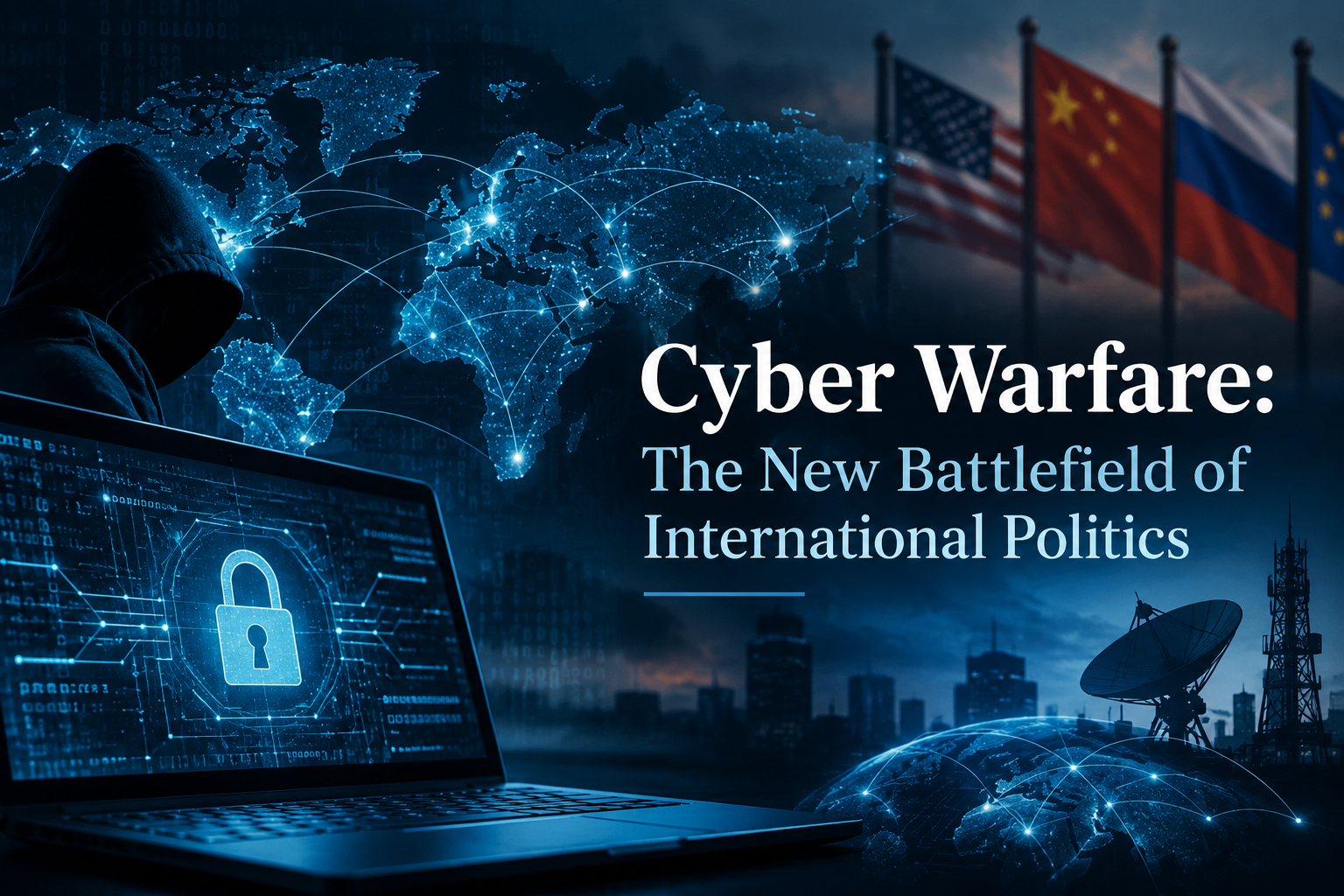
Cyber Warfare: The New Battlefield of International Politics
Is the next world war fought with codes instead of weapons? explore how operations are becoming the new battleground for global powers.
Published 2 months ago
Introduction
In today’s international system, conflict is no longer limited to land, sea, and air. Digital advancement has created a new arena: cyberspace. Cyber warfare is the use of digital technologies by states or non-state actors to attack, disrupt, or gain unauthorized access to systems and networks. As nations grow dependent on digital infrastructure, cyberspace has become central to international relations and national security.
The Rise of Cyber Warfare
The importance of cyber warfare has grown with the expansion of the internet and digital infrastructure. Governments, armed forces, banks, hospitals, and communication networks rely heavily on interconnected computer systems. This dependence has also created new vulnerabilities. States can use cyber capabilities for intelligence gathering, disrupting communications, and targeting critical infrastructure without deploying conventional military forces.
Cyber Warfare and Global Power
Cyber capabilities have become central to national power. Leading states are advancing cybersecurity and cyber operations to protect interests and strengthen strategy. Cyber espionage enables access to critical political, military, and economic information, whereas cyber attacks serve as tools of coercion in international tensions. As a result, cyberspace now functions as another domain of competition among powerful nations.
Impact on International Security
Cyber warfare creates serious challenges for international security because identifying the exact source of an attack can be difficult. This uncertainty can increase tensions between states. Cyber attacks can also disrupt economies, essential services, and civilian life without a traditional military conflict.
Pakistan and Cybersecurity
For Pakistan, cybersecurity is increasingly important as digital services and online communication expand. Protecting government institutions, financial systems, defense networks, and critical infrastructure is essential for national security and economic stability.
Conclusion
Cyber warfare has transformed modern international conflict. It shows that national power now depends not only on military strength but also on technological capabilities and digital resilience. Therefore, international cooperation and stronger cybersecurity measures are essential for maintaining peace and security in the digital age.
More from Tech
Greening the Factory Floor: How Sustainable Tech is Redefining Industrial Chemistry
Dive into the latest green innovations reshaping industrial chemistry. Discover new materials, grant‑ready strategies, and how scholars can translate breakthroughs into publishable research.
Read postA creator-focused post about Ollama
Use this outline to write a strong summary for a post about Ollama.
Read postStill Managing Your Finances the Old Way? Upgrade with AI-Powered Business Software | Solinvo 2.0
Outdated financial processes slow businesses down. Solinvo 2.0 replaces manual workflows with a unified system powered by AI—giving you real-time control over inventory, sales, and accounting in one place.
Read post
Responses
Log in to comment and join the discussion.
Log inYou did a great job 👍🏼