The Role of Superpowers in Shaping World Politics
The Role of Superpowers in Shaping World Politics
Published 1 month ago
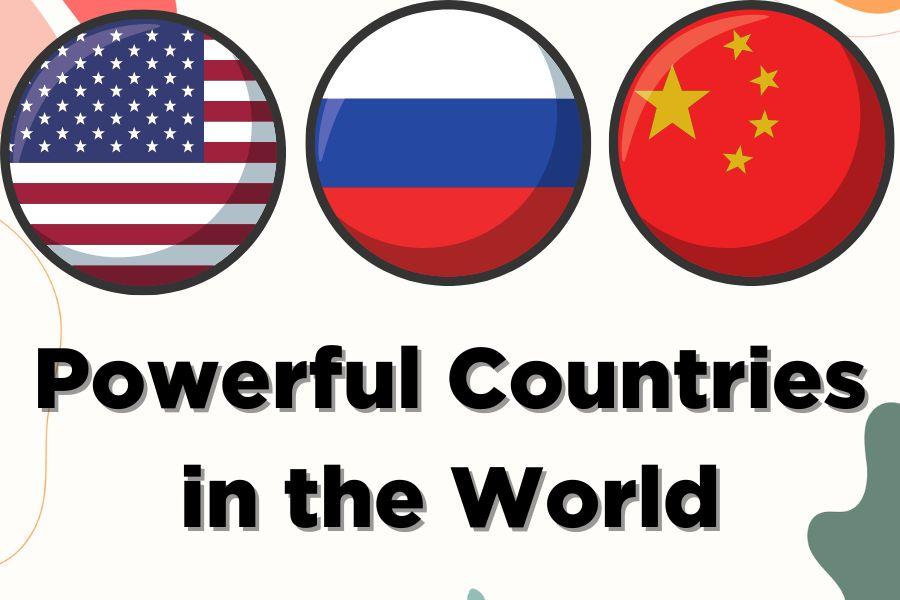
The Role of Superpowers in Shaping World Politics
Introduction
In today's interconnected world, international politics is strongly influenced by countries that possess significant military strength, economic resources, technological development, and diplomatic influence. These countries are commonly known as superpowers. Their decisions often affect not only their own citizens but also the political, economic, and security conditions of countries around the world.
The United States, China, and Russia are important examples of major powers that influence global affairs. Through international agreements, economic policies, military alliances, and diplomatic negotiations, these countries play a significant role in shaping the modern international system. However, their influence creates both opportunities for international cooperation and challenges for global peace.
What Are Superpowers?
A superpower is a country with the ability to influence international affairs on a global scale. Its power is not measured by military strength alone. Economic stability, technological advancement, cultural influence, political leadership, and diplomatic relationships also contribute to its global position.
For example, a country may influence other nations through trade agreements, foreign investment, educational opportunities, technology, or international institutions. This demonstrates that power in international relations has several dimensions.
1. Military Power and International Security
Military strength is one of the major tools through which superpowers influence world politics. Powerful countries maintain advanced armed forces, develop security partnerships, and participate in international security arrangements.
The United States, China, and Russia have significant military capabilities and influence security discussions in different regions. Their strategic decisions can affect regional stability, international alliances, and the risk of conflict.
Military power can also discourage potential aggression through deterrence. However, competition between powerful countries may increase tensions, encourage arms competition, and make diplomatic solutions more difficult.
Therefore, military strength can contribute to national security, but lasting international peace also requires communication, restraint, and cooperation.
2. Economic Influence and Global Trade
Economic power is another important way superpowers shape international relations. Countries with large economies can influence global markets, trade policies, investment patterns, and financial institutions.
The United States plays a major role in global finance, while China has become a major force in manufacturing, international trade, and infrastructure investment. Their economic decisions can affect supply chains, developing economies, and international business.
For example, trade disputes between major economies may affect the prices of goods, employment, and production in other countries. Similarly, investment projects can create opportunities for economic development while also raising questions about debt, dependency, and national interests.
This shows that economic relations are not simply about buying and selling goods; they are also connected to political influence and strategic interests.
3. Diplomacy and International Organizations
Superpowers have considerable influence in international organizations, including the United Nations. They participate in negotiations, support resolutions, build alliances, and contribute to discussions about international peace and security.
The five permanent members of the United Nations Security Council—the United States, China, Russia, the United Kingdom, and France—possess veto power over substantive Council resolutions. This gives them a special role in decisions concerning international peace and security.
Diplomacy can help powerful countries negotiate agreements, manage disagreements, and prevent conflicts from escalating. However, disagreements among these countries can also make it difficult for international institutions to respond effectively to global crises.
The influence of superpowers therefore demonstrates both the importance and the limitations of international diplomacy.
4. The Competition Between the United States and China
One of the most significant features of contemporary world politics is the strategic competition between the United States and China.
The two countries compete in areas such as trade, technology, military influence, and international leadership. At the same time, they maintain economic connections and share an interest in addressing certain global challenges.
Their competition affects other countries because governments must consider how their trade, technology, and security relationships with these powers may influence their national interests.
However, this competition should not be understood only as a struggle for dominance. It also raises important questions about cooperation, economic interdependence, and the future structure of the international system.
The challenge for the international community is to manage disagreements without allowing competition to develop into a wider conflict.
5. Soft Power and Cultural Influence
Not all international influence comes from military strength or economic pressure. Superpowers can also influence other countries through culture, education, values, technology, and public diplomacy. This is known as soft power.
For example, universities, films, music, scientific research, international scholarships, and cultural exchanges can shape how people perceive a country.
Soft power can strengthen diplomatic relationships and encourage cooperation without direct military or economic pressure. However, a country's international image also depends on how its policies are perceived by people in other societies.
This demonstrates that global influence involves not only the ability to exercise power but also the ability to build trust and attract cooperation.
6. The Impact on Developing Countries
The decisions of superpowers have significant consequences for developing countries, including Pakistan.
Pakistan's relationships with China and the United States illustrate how a country may seek cooperation with major powers in different areas. China is an important economic and strategic partner for Pakistan, particularly through the China-Pakistan Economic Corridor (CPEC). Pakistan's relationship with the United States has also involved trade, security cooperation, diplomacy, and regional issues.
For developing countries, partnerships with powerful states can provide investment, technology, educational opportunities, and access to international markets. At the same time, governments must consider the risks of economic dependency, external pressure, and competing strategic interests.
A key challenge is to maintain constructive international relationships while protecting national sovereignty and pursuing independent foreign-policy objectives.
For Pakistan, this means evaluating international partnerships according to national interests, economic needs, regional stability, and long-term development goals.
7. Towards a Multipolar World
The international system is changing as countries such as China and India expand their economic and diplomatic influence, while regional organizations and middle powers play increasingly important roles.
This development is often discussed through the concept of a multipolar world, in which power and influence are distributed among several major actors rather than concentrated in one dominant state.
A multipolar system may create more opportunities for countries to diversify their partnerships and participate in international decision-making. However, it may also increase competition among major powers and make international coordination more complicated.
The future of world politics will depend partly on whether powerful countries can manage their differences and cooperate on shared challenges, including climate change, economic instability, public health, and international security.
Conclusion
Superpowers play a central role in shaping world politics through military capabilities, economic influence, diplomacy, technological development, and cultural connections. Their decisions can create opportunities for cooperation and development, but they can also contribute to rivalry, inequality, and international instability.
Nevertheless, global politics is not controlled by superpowers alone. Smaller states, regional organizations, international institutions, and civil society also influence international outcomes.
The real challenge is to ensure that global power is exercised responsibly and that international relations are guided not only by competition but also by cooperation, mutual respect, and respect for international law.
Ultimately, a stable international system requires more than powerful countries. It requires a willingness to recognize that global peace and prosperity depend on the choices of the international community as a whole.
More from Startup
500+ Users and Growing – Join VertexInvo Community for Creators
VertexInvo Community crosses 500+ users. Join a growing platform where creators share ideas, publish blogs, and build real impact.
Read postHard Power :How States Build Influence in International Relationsvs Soft Power
Hard power uses military and economic strength, while soft power uses diplomacy, culture, and attraction. Smart power combines both to build influence, security, and cooperation.
Read postRent Verify by VertexInvo – Property Management Software for Landlords & Managers
Still managing rentals on spreadsheets? Rent Verify by VertexInvo helps landlords and property managers move to a smarter system with better organization, payment tracking, and operational control.
Read post
Responses
Log in to comment and join the discussion.
Log in