International Relations in the Age of Artificial Intelligence
“AI is changing global power.”
Published 1 month ago
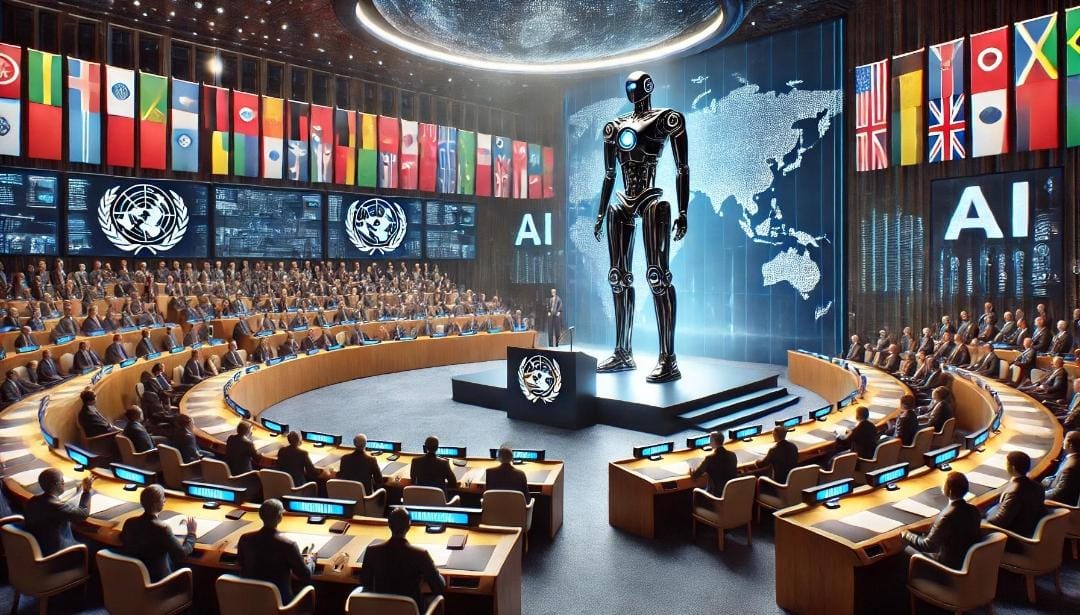
International Relations in the Age of Artificial Intelligence
Artificial Intelligence (AI) has become an important part of our daily lives. Today, we use AI in many areas such as education, business, healthcare, social media, communication, and transportation. Many people use AI tools to search for information, study, write, translate, or solve different problems. However, AI is not only changing the lives of individuals. It is also changing the way countries interact with each other. Because of this, Artificial Intelligence has become an important topic in international relations.
International relations are mainly about how countries deal with each other. In the past, the power of a country was mostly measured through its military strength, economic resources, population, and political influence. Diplomacy was also very important because countries used communication and negotiations to solve problems and build relationships. Today, technology has become another important source of power. Countries that are more advanced in technology can have an advantage over other countries. AI is now becoming one of the most important technologies in this competition.
Countries such as the United States and China are investing heavily in Artificial Intelligence. They are spending money on AI research, education, technology companies, and defense systems. They understand that AI can play an important role in their economic and political future. A country with strong AI technology may have better communication systems, stronger cybersecurity, improved industries, and advanced military capabilities. This means that AI is becoming connected with national power.
One major area where AI affects international relations is international security. Countries can use AI to improve their security systems and protect important information. For example, AI can help governments identify cyber threats and detect unusual activities online. It can also help intelligence agencies study large amounts of information and identify possible security risks. In defense, AI can be used to improve military equipment, surveillance systems, and decision-making.
However, the use of AI in security also creates new risks. One important risk is cyberattacks. Countries or groups can use advanced technology to attack another country's computer systems, government websites, or important infrastructure. AI can make these attacks faster and more difficult to detect. This can create tensions between countries and may become a serious international security issue.
Another concern is autonomous weapons. These are weapons or military systems that can use technology to make certain decisions with less human control. Although such technology may help soldiers and improve defense, it also creates ethical and security concerns. If an AI system makes a wrong decision, innocent people could be harmed. Therefore, countries need to think carefully about how much control AI should have in military situations.
AI is also connected with the problem of misinformation. Today, AI can create realistic-looking pictures, videos, voices, and news stories. Sometimes it can be very difficult for ordinary people to know whether something is real or fake. This can become dangerous during political elections, wars, or conflicts between countries. False information can influence people's opinions and create fear or anger.
For example, imagine that a fake video shows the leader of one country making an aggressive statement against another country. People may believe the video is real and become angry. The other country may also react to it. Later, it may be discovered that the video was created by AI and was completely fake. Even though it was not real, it could still create tension between the two countries. This shows how AI-generated misinformation can affect international relations.
AI can also have a strong effect on the global economy. Countries and companies are using AI to increase productivity, improve services, and develop new products. AI can help businesses save time and reduce costs. Countries that become leaders in AI may gain economic advantages and attract more investment. On the other hand, countries that do not have enough technology, education, or resources may fall behind.
This can create a technology gap between developed and developing countries. Wealthier countries usually have more money to invest in research and advanced technology. Developing countries may not have the same resources. If this gap continues, some countries may receive most of the benefits of AI while others may struggle to keep up. International cooperation can help reduce this problem by providing developing countries with access to education, research, and technology.
At the same time, AI provides opportunities for international cooperation. Countries do not always have to compete with each other. They can also work together to make AI safer and more useful. Governments can discuss common rules and guidelines for the responsible use of AI. International organizations can help countries communicate and create agreements about AI.
For example, countries can cooperate on rules related to AI weapons, cybersecurity, privacy, and misinformation. They can also share research and knowledge to solve common problems. Cooperation is especially important because AI technology can cross national borders. A cyberattack or fake information created in one country can quickly affect people in many other countries.
AI can also support global development. It can be used in healthcare to help doctors identify diseases, in education to support students, and in agriculture to improve farming methods. Developing countries can benefit from these technologies if they receive proper support and training. This shows that AI is not only about military power or competition. It can also be used to improve people's lives.
Another important issue is human rights and ethics. Countries need to make sure that AI is used responsibly. AI systems can sometimes make mistakes or show unfair results if they are trained using biased information. There are also concerns about privacy because AI can collect and analyze large amounts of personal information. Governments need to create rules that protect people's rights while still allowing useful AI development.
In my opinion, AI will become even more important in international relations in the future. Countries that understand and develop AI technology may have greater influence in global politics and the economy. However, simply becoming powerful through technology is not enough. Countries also need to think about responsibility, peace, and human safety.
The future of international relations will depend on how countries choose to use AI. If countries use AI only for competition and military purposes, it may increase tensions and create new conflicts. But if they use it for cooperation, development, education, healthcare, and peace, AI can become a positive force for the world.
In conclusion, Artificial Intelligence is becoming an important factor in international relations. It is changing national power, international security, the global economy, communication, and diplomacy. AI can provide many benefits, but it also creates serious risks such as cyberattacks, misinformation, autonomous weapons, privacy problems, and unequal access to technology. Therefore, countries should not only compete in AI but should also cooperate with each other. By creating responsible rules, sharing knowledge, and protecting human rights, countries can make sure that AI is used for the benefit of humanity and global peace.
More from Startup
500+ Users and Growing – Join VertexInvo Community for Creators
VertexInvo Community crosses 500+ users. Join a growing platform where creators share ideas, publish blogs, and build real impact.
Read postHard Power :How States Build Influence in International Relationsvs Soft Power
Hard power uses military and economic strength, while soft power uses diplomacy, culture, and attraction. Smart power combines both to build influence, security, and cooperation.
Read postRent Verify by VertexInvo – Property Management Software for Landlords & Managers
Still managing rentals on spreadsheets? Rent Verify by VertexInvo helps landlords and property managers move to a smarter system with better organization, payment tracking, and operational control.
Read post
Responses
Log in to comment and join the discussion.
Log in